Monday, 7 May 2012

Films of the Month: May

 Murphy's War, a low key war film set in South America, kicked off my films in May. It starred Peter O'Toole opposite his then wife Sian Phillips, as well as Philippe Noiret (most famous for his role Cinema Paradiso). It told the story of Murphy (O'Toole) who is the sole survivor of a German U-Boat attack in the South American rivers. He convalesces in a local village, where he is nursed by Sian Phillips' character and begins to plot his vengeance, with the help of local hand Louie (Noiret). Being a low key war film, it's quite slowly paced, but it's still quite an interesting film, if a little uncomplex. The absolute strength of the film is in the performances, especially that of O'Toole who reverts to his native Irish accent for his role. The stubborn determination of the character in the end becomes his own downfall, as his single-mindedness intentions of vengeance lead to a lot of consequential decisions. Noiret and Phillips are also great as they try to convince Murphy that vengeance isn't the answer, as the end of the war approaches. My main problem with the film is that at times I found the dialogue hard to follow due to both O'Toole's and Noiret's strong accents. The slow pacing, whilst not ideal, suits this film. It's unconventional style is what sets it apart from the rest of the war genre. I found it not too dissimilar to Herzog's much lauded Fitzcarraldo, with O'Toole's charisma akin to Klaus Kinski's sense of showmanship, which makes this one a bit of a find.
                                             

 I continued working my way through the films of Marilyn Monroe by watching River of No Return, in which she starred opposite Robert Mitchum. Set in the Canadian west, it sees Mitchum as a farmer, reunited with his young son after spending time in jail for manslaughter. His son became acquainted with a saloon singer (Monroe) on his journey to his father and Mitchum's character is grateful for her assistance with his son. A few days later the three's path cross once more as Monroe and her fiancee run into trouble rafting near Mitchum's ranch. We learn that her fiance is finding the nearest town to register his claim to a gold mine he won a poker game. It's here where he robs Mitchum of his horse and gun and abandons his wife to claim his fortune. The remaining trio are soon beseiged by natives and are forced into an adventure down the river in order to escape.
 Whilst the plot is a little weak, director Otto Preminger manages to make the best of it, with exciting set pieces and shots of the Canadian landscape to make the film more aesthetically pleasant. Mitchum is in typical laconic mode as the man trying to redeem his own misdemeanours, whilst convincing Monroe that her fiancee isn't good enough for her. It's hard not hold some admiration for Mitchum as one of the most interesting, as well as coolest leading men ever to come out of Hollywood. As for Monroe, she at least manages to portray her limited character with a bit of depth, as well as maternal nurturing side that is rarely part of her onscreen persona. It's a film though that has quite a few question mark around it, most notably a scene of passion between the two protagonists in the woods. I imagine the said scene, where Mitchum aggressively forces Monroe to the ground and kisses her, whilst she struggles, would make modern audiences uncomfortable. Bordering on rape, it's possibly one of the few films I've seen from this era that tackles a scene such as this in such a stark manner. It's certainly one that I think should be viewed in the context of both when it was made and the time period the film is set. Aside from this, the film is at least a pleasant viewing and if you enjoy the films of the two leads, I would suggest this is a must see, but it's never really noticeably better than similar contemporary Westerns of this era.
                                             

 Having watched the film adaptation of John Le Carré's Tinker, Tailor, Soldier, Spy I managed to check out the first film adaptation of his work in The Spy Who Came In From The Cold. It's a film I knew little about and what to expect, though I was aware it involved reappearing characters such as George Smiley and Control from other Le Carré novels. This film followed Alec Leamas (Richard Burton) as a British Cold War Spy who administrates the West Berlin office of the 'Circus', we first see him attempting to greet one of his operatives coming in from the East. As he passes the border, he is shot dead, and we begin to learn that Leamas has lost a lot of his operatives recently. He is then reassigned by the Circus back in London, where he becomes a library assistant and he soon becomes disillusioned and depressed and susceptible to the Russians.
 It's hard to say much else about this film without given away too many plot twists and the motivations behind the character, which I feel the viewer has to see first time for themselves. As spy films go this is uncompromising in it's complexities and sombre nature. That's what sets it apart from all other spy films of this era. It's also filmed in Black and White which only adds to the grittiness of the piece. The story is so well written, and despite the complex narrative the films is able to capture the story in an appropriate way as not to confuse the viewer too much. Richard Burton's performance is pretty electric too, Burton thankfully forgoes his Hollywood bravado to give a far more restrained and engaging performance. I was also impressed by Oskar Werner, who I had only previously seen in Truffaut's Jules et Jim, here he plays Burton's counterpart and enemy. I was however a bit disappointed by the casting of Claire Bloom, who despite being a celebrated thespian, is miscast as the left leaning teenager 'Nan'.
 For anyone who's seen Tinker, Tailor, Soldier, Spy this film gives a noticeably different angle to George Smiley's character, that many would find intriguing. Though somewhat sidelined for the majority of the film Smiley still has a pivotal role in the plot of the movie, and his actions are open for interpretation by the viewers. The style and pace of the film is also similar to that of last year's hit film, which is obviously relative to Le Carré's own style of narrative. The plot to this however offers more and it's one of those films you have to really concentrate on to fully appreciate, but everything is there for the viewers to dissect, even the writing between the lines. There are still a few things that I question, which what makes the film so stimulating and true to the spy games of the Cold War. This is a film I can't recommend highly enough, and it's surprising how it's become somewhat lost amongst it's fellow spy films.
                                                           

 From one element of the Cold War to another now. I have forever held an interest in the pioneers of space travel and so I was delighted to finally get around to watching The Right Stuff. A film which centres on the collective journey of the "Mercury 7" pioneers and their families, as they embark on America's first phase of the Space Race. It also tells the story of test pilot Chuck Yeager, who despite his own pioneering work on the air field, fails to qualify for the Mercury programme due to his lack of degree qualification. It's a fascinating visual representation of man's journey into speed and the final frontier, as we first see Yeager break the sound barrier, before the Mercury 7 become the first Americans into space. The film also features an impressive cast such as Ed Harris, Scot Glen, Dennis Quaid, Fred Ward, Barbara Hershey, Veronica Cartwright, Harry Shearer, Jeff Goldblum, Lance Henriksen and American thespian Sam Shepard as Yeager.
 Like most my knowledge of the men involved with the Mercury space programme only extends as far as the names John Glenn and Alan Shepard, although I was aware of Gus Grissom, due to his fatal demise in the Apollo 1 fire test. So in that sense it was interesting to learn more about the other men involved, and to see the complete contrast in each types of character. Some, like Glenn, lived up to the representation that the contemporary media had provided him with, whilst others came across as  slight renegades and playboys, most notably of all Shepard. This led to one of my few problems with the films, in that some of the characters were a bit cartoonish and two dimensional. Not least of all Vice President Lyndon B. Johnson who comes across as a complete hillbilly as he tries to use the programme for his own political gains. (It's interesting to note that there are still those who believe Johnson played some role in Kennedy's assasination.)  John Glenn is also presented in a "whiter than white" manner, which I felt may have been influenced due to his own political ambitions at the time of the films release. Though it was quite touching and probably very factual in relation to Glenn's devotion to his wife and family life. The film goes further in trying to relate the emotional distress the Space programme caused those dearest to the pilots and how any semblance of normality was affected by it. This caused the film, at times, to feel a bit too hokey and overbearing.
 The real highlights of the film are the scenes which involve the various forms of flights. From the desert test flights to the space orbits footage is both brilliant captured and intertwined with archive footage from the period. It makes the film feel all the more realistic and is at times awe-inspiring. As for the performances, despite the somewhat limited characterisations, Fred Ward is the one who provokes the most interest as the tragic Gus Grissom. Scot Glen also gives a colourful performance as Alan Shepard and Sam Shepard is convincing as a man denied his dream, but left with the hunger and admiration for pioneering travel. There is also an interesting rivalry between Sam Shepard's Yeager and pilot Gordon Cooper (Dennis Quaid), as both vie to be the fastest men in the world.  As for the rest it is somewhat standard, but then again it's not that type of film and each are able to invoke affable performances nonetheless.
 Whilst the stories Space Race and the German engineers are only partially covered and alluded to, it's a film that I highly recommend for anyone with a modicum of interest in the star wars of the 50's and 60's. Of course to include more back story to the Space Race and how the Germans were utilised after WW2, would mean the film would run at six hours. Not that I would have minded though, as this was a truly fascinating film, surprising for one to come out of Hollywood in the 80's. For my money it's one of the most inspiring films I've ever seen, in spite of the overly sentimental representation of America and their astronauts.

 I was a bit apprehensive about Sacha Baron Cohen's The Dictator having seen the trailer, but the reviews had been quite favourable. I should have gone with my gut on this one though, as the film was at best sub-standard. The biggest problem with it, is that it's too hit and miss. I personally find it too easy for anyone espescially a comedian to say or do something offensive in order to get a laugh. Also it doesn't cater for everyone's taste obviously. I found the gags involving genetalia a bit too easy and obvious for a laugh, whilst the equally offensive jokes about abusing 14 year old boys and using a Wii game to massacre the '72 Israeli Olympic team did cater to my sick humour side. Though these jokes garnered nothing more than a chuckle. Equally when Cohen's character masturbates for the first time, he attempts to relate it to some sort of allegory of "The American Dream" with a montage of American icons accompanying it. Again whilst other members of the audience laughed, I felt quite glad that I was above it. This is probably the best way of conveying my gripes with the film and is where my snobbery begins to become exposed. There is no intelligence in this humour, it's all seems like it's trying to shock to the masses, who to me seem a bit too sheltered from lewd humour, judging by the fellow audience at my screening. There were a few glimmers of what I enjoy from comedy, such as misdirections jokes, for instance when Cohen's character is looking for a pseudonym to disguise his identity and he looks at a sign saying "Hazzezi's Burgers" he comes up with the name 'Burger'. There was also another amusing scene in a helicopter, where he talks to his friend in his native tongue about Bin Laden, Porsches and New York City landmarks, which then gets misconstrued by American tourists. Again though most of the funny stuff, seems like 'the best of a bad bunch' and I never had any real belly laughs or found something hysterical. Cohen's previous project Bruno, suffered from the same 'hit and miss' problems, and I'm not sure which out of the two I preferred. One thing is certain though, neither come close to Borat, which for me is one the best characters to come out of British comedy.
  This film takes a good fifteen minutes to really get going, and I think it's in part to the introduction of Anna Faris' character, who whilst isn't a barrel of laughs, but does serve as a good straight character for Cohen to play off. Ben Kingsley is obviously a great actor, but I think he gets slightly lost in this one. Here he plays Cohen's not so faithful ally who tries to overthrow Cohen's dictator. Although this is only a minor supporting role intended to give license to Cohen's character as well as give the film some kind of plot, it all feels a bit lacklusture. I think maybe Cohen should return to Ali G for his next film, though I never saw Ali G in da House I understand it wasn't great, so to me he has nothing to lose by doing a new Ali G project. As for The Dictator, I suppose an easy comparison is to Chaplin's The Great Dictator. Whilst Chaplin's film is a little simplistic and naive I think it's a better satire of a dictatorship, it's funnier too. Cohen does attempt to intertwine the ideologies of dictatorship and America's democracy, which is amusing, but isn't something revelatory. I expected a bit more from the Cambridge educated comedian.
                                                           

 How To Steal A Million was a crime caper directed again by one of my favourites William Wyler. This time it saw Hugh Griffiths as a French charlatan who forges and sells famous artworks with the aid of his daughter (Audrey Hepburn). She gains the trust and friendship of Peter O'Toole after she catches him trying to steal these forgeries, and soon they have to work together in order to stop the authorities learning of her father's penchant for forgeries. My expectation wasn't high for this film as it has never been celebrated as one of Hepburn, O'Toole or Wyler's best, but then again when measured against these three great's body of works it was never going to live up to it. It was ultimately a thoroughly enjoyable piece, and I even think I preferred it to Hepburn's iconic Breakfast at Tiffany's. How she is supposed to be the offspring of Hugh Griffith's in this film I'll never know, but she gives one of her synonymous charm offensive performances. Whilst to me she plays the same role in pretty much all the pictures she ever made, it is easy to see why she has become such an icon. Her sweet, vulnerable, yet cheeky persona is easy to fall for, even if it does feel like she's phoning it in at times. As for O'Toole he glides through this picture as if he had written the screenplay himself, but without any air of arrogance, albeit a bit mannered. He has all the best one liners as he seemingly holds all the cards throughout this whole affair. I was also pleased to see Eli Wallach in a supporting role, interestingly in the same year he would make his career defining film The Good, The Bad and The Ugly. I thought he and Charles Boyer (the Golden Age legend) worked well to provide additional comic relief intermittently through the film.
 I also enjoyed the actual heist sequence which was quite intricate, yet engaging and believable for the audience. While the film did come off a bit Pink Panther-esque it was still a very fun and charming film that any Hepburn fans would instantly fall in love with. While not the pinnacle of output from O'Toole and Wyler, it's just another example used to showcase each's undeniable talent in the art.
                                           

 I returned to the Cold War theme by watching The Hunt For Red October. Based on the Tom Clancy, it is adapted for the big screen by Larry Ferguson and directed by the greatest action movie director of the modern age (John McTiernan). It follows a Soviet submarine captain's (Sean Connery) journey to America in the USSR's newest nuclear submersible. What the Americans are trying to figure out is whether he is going to attack or defect.
 It is a film produced as a blockbuster and aimed for the masses, so for it may not appease ones with a pedantic obsession with Cold War or possibly Clancy's novel as I understand this to be an emaciated version. What it does achieve though is a tense, gripping account of how these two warring sides are able to communicate with each other in a way where their intentions can be understood. Sean Connery does a good job in making a believable character that may have come off as absurd if incorrectly approached. His counterpart is Alec Baldwin, who has to decipher Red October's intentions as it nears US waters. I find Baldwin nauseating at the best of the times, but at least here he makes Jack Ryan relative and identifiable for the audience. There is also experienced support from the likes of Tim Curry, Scott Glen and Sam Neil (who at times struggles with the Russian accent).
 The film is a great taut thriller that relies gripping psychological warfare for it's action. McTiernan does a great job in making this easy to watch, whereas others may have made it too dull. Whilst not the most intellectual film ever, it still manages to offer moments of genuine intrigue and guile. I have never watched the other Jack Ryan movies, but I'd be surprised if they are better than this.
                                           

 James Whale's adaptation of H.G. Wells' The Invisible Man gave Claude Rains' his star making role. This version is now nearly 80 years old, and I think anyone watching would be surprised at the quality of the special effects. When Rains first reveals himself to be invisible it looks believable and makes you wonder how they achieved such effects. I think this what makes the film as good as it is, as without this it would be instantly forgettable. Sadly the acting isn't up to today's standards and whilst it is watchable, some players appear either stilted or are prone to overact. Rains himself at times fall foul to over doing it, but overall he gives the best performance and is a good choice to portray the mad title character. There is also one of the most annoying characters I've ever witnessed on screen, an Inn lady who overacts to the nth degree when The Invisible Man begins his rampage.
 The film's narrative and character development is also affected by the film's short run time in a detrimental way. It feels like there should have been more of a back story to before the protagonist became invisible.  At just 75 minutes long though, it is worth your time as you are taken back to a time where movie making was real art form and didn't have to rely on tacky looking, overblown CGI for it's effects.
                                                          

 My next film was a lesson in overacting, with Ronald Coleman playing an actor who becomes so immersed in his role as Othello, that he soon reproduces this role in real life, with fatal consequence. A Double Life was the first Coleman film I had watched, though I had been aware of his other films such as Lost Horizon and Random Harvest, where he would portray the dashing gentlemanly type. Here he takes on a more sinister and twisted role, and to fantastic effect, and would rightly win the Best Actor Oscar for it.
 I must admit that when I had first read the films plot, I thought it absurd, and for the first twenty minutes of the films, it feels like it. However, it's through Coleman's work that this ends up not being as ridiculous as it could and probably should be. He perfectly balances his character's real life persona of normality with the conflicted emotions of the Shakespearean character he's portraying. It's interesting that the role was initially intended for Laurence Olivier, but even the great Olivier would have struggled to match Coleman's portrayal. The supporting cast was also impressive, with a large amount previously unknown to me, apart from that of Edmund O'brien and Shelley Winters, in her first credited movie role. Winters is in her typcial vulnerable downtrodden social outcast role that would largely define her movie career, but is still brilliant to watch. Not many actress' would have the guts to take on these unglamorous roles in this period of Hollywood.
 The film itself is also quite subverssive as Coleman engages in an illicit relationship with Winters, whilst trying to amend his nuptials with his ex-wife and leading lady played well by Signe Hasso. The film is the brain child of husband and wife team Ruth Gordon (herself a celebrated actress) and Garson Canin. The notion of life imitating art works really well throughout the film as the catalyst that drives Coleman's insanity deeper. It's parallel's with Shakespeare's Othello are interesting and easy for the audience to decipher, which makes the film that bit more gripping to watch. It does at times fall victim to naive moments, that are either a sign of the times when the film was made, or maybe slightly hindered by how explicit the makers could be with certain scenes. It's also directed by the great George Cukor, and is just another entry in a quite extraordinary catalogue of films made by him. Whilst not one of the very best films I've ever seen, it's definitely up there with some of the best film-noirs I've watched (mainly thanks to Coleman), and I thought it was as good as Billy Wilder's Double Indemnity, which I've always found to be over lauded.
                                                           

 Surrogates was a film with a premise that appealed to the Sci-fi fan in me. Sadly it started off by giving out some ridiculous and unfeasible statistics that immediately damaged the credibility of the film. It's claim that 98% of the 'world's' population now had a Surrogate android to run their daily lives was a ridiculous statement on any level. Let alone for a film made in 2009 and set in 2017. Even if it had been the US population, there is absolutely no way that amount of people would be able to afford a surrogate, let alone a company being able to manufacture and distribute 295 million units in just ten years. If I were to be even more pedantic, I imagine the energy costs would be quite vast in running one of these things a minimum of twelve hours a day. The film did try to justify this claim by stating that the use of androids in a commercial and military capacity, resulted in affordable androids for general use, even so it detracted from the movie. There were a few too many of these questions concerning the film's concept that kept distracting me throughout the movie.
 Anyway once the movie got going, it featured Bruce Willis as an FBI investigating android, who was trying to find out who and what had behind the murders of a number of these Surrogates, which resulted in the death of their human operator's also. Willis' Pulp Fiction co-star Ving Rhames' appeared as the anti-android messiah, prophesying humanity's downfall through the acceptance of androids. James Cromwell appeared in his all too familiar role of corporate patriach, infact they may have just spliced in footage from i-Robot. It was good however seeing Rosamund Pike, who's kept somewhat of a low profile since her appearance in Die Another Day. The acting is bearable, but it is the same type of characters that we've seen in every 'dystopian' Sci-fi movie.
 Despite the problems I had with the film, it was mildly entertaining and isn't as convoluted as my first paragraph may have suggested. It is pretty straightforward and easy to follow, and doesn't require the viewer to over think the plot, maybe just the environment setting of the film. Overall though the film falls far short of making it's mark on the genre and is ultimately forgettable. It has nothing powerful or poignant in the film's message that sets it apart from the majority. An interesting idea, that could have been executed a whole lot better.
                                         

Tuesday, 17 April 2012

Bond at 50: The "Good" Bond Girls

 This is the toughest list of them all, so to make things easier, only included in the list are the "good" bond girls, and there will be a latter list for the henchwomen. I can't emphasise how hard a top 5 is, although Ekland looked incredible in "that" bikini she couldn't act, Izabelle Scorupco seemed to have everything but she didn't quite make it, Carole Bouquet has everything except personality, Ursula Andress was "THE" original bond girl and Denise Richards erm, well she was hot...

5. Solitaire (Jane Seymour, Live and Let Die)
 Jane Seymour just about gets on to the list in her role as "Solitaire". The tarot card reader whose powers lie in her virginity. Of course Bond manipulates her completely in order to get her into bed, which is portrayed on screeen in a completely misogynistic manner. Still she's superbly naive to Moore's double-entendre's and rye lines and she looks beautiful throughout the film. Seymour was one of the few Bond girls to forge a successful post-Bond career, and still maintains her good looks today.


4. Anya Amasova (Barbara Bach, The Spy Who Loved Me)
 Mrs. Ringo Starr is possibly the most attractive of all the Bond girls. She was also developed as a character to match Bond, as she plays his KGB counterpart. Despite having one of the better roles of a Bond girls, her acting skills leave much to be desired. Still, it doesn't matter as she wears some of the most provocative outfits of the Bond series. Another who starred opposite Moore, and as such got the brunt of his cheesy one liners and puns, which make her status as a Bond girl all the Moore impressive.


3. Tracy Di Vicenzo (Dame Diana Rigg, On Her Majesty's Secret Service)
George Lazenby and Diana Rigg - On Her Majesty's Secret Service
 The only true Bond girl, in the sense that she married him. It's believable and easy to see why, as she is a strong willed woman, who manages to hold her own and equal Bond in the charm department. Though Tracy isn't the most attractive of the Bond girls, she has intelligence and personality that few of the early Bond girls match. Her fatal and poignant ending is one of the most memorable and admired scenes from the franchise. She's yet another element as to why On Her Majesty's Secret Service is one of the best Bond films.


2. Pussy Galore (Honor Blackman, Goldfinger)
 The most famously named Bond girl, and because of it the most recognised. Despite her ridiculous name, she is definetly one of the more interesting Bond girls, as a part of Auric Goldfinger's crew of female pilots. Her sexuality, like her morality, is implicitly questionable to say the least, despite this Bond manages to seduce her in the stables. She is one of the most strong-willed of the Bond girls, as well as being one of the most aesthetically pleasing. It's interesting to note that 8 years earlier Honor Blackman was the star and Sean Connery an extra in the Titanic-based film A Night to Remember. Honor Blackman is now 84, but still looks remarkably good for her age.


1. Vesper Lynd (Eva Green, Casino Royale)
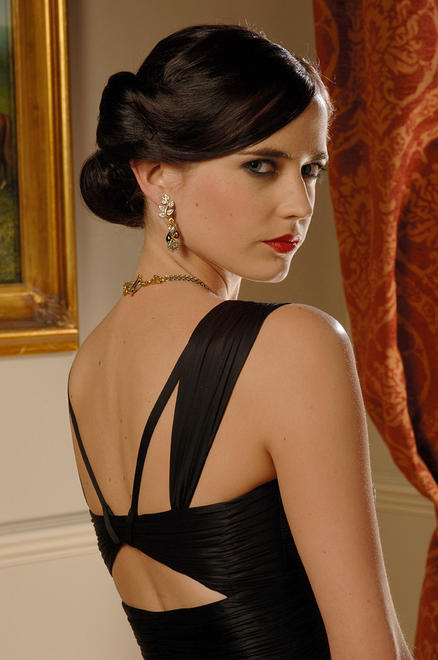
 For me, I think Vesper Lynd pips, as not only is she a great Bond girl, but her character goes some way in shaping the man Bond would become. Another independant Bond girl, but who comes across as incredibly feminine at the same time. She at times appears emotionally fragile (as too does Bond himself), but is able maintain her composure when it matters most. She also has her own wit and charm, as well as intelligence and guile. She's the first woman Bond falls in love with, and her demise is what shapes the Bond we know and love. Eva Green is one of the most perfectly proportioned women in film today, and therefore is one of the best looking Bond girls. A great acheivment in making a Bond girl, that encompasses all the good that came before her, and a benchmark for those who follow.

Wednesday, 4 April 2012

Films of the Month: April

 The Quiet Man kicked of my movies this month. It's a film that I've always been aware of, having seen that famous kiss between John Wayne and Maureen O'Hara many times growing up watching E.T: The Extra Terrestrial. Despite liking Wayne, I've never been interested to see this film. Again it's directed by one of my favourite directors in John Ford, who did the equally coloquial How Green Was My Valley. The Quiet Man tells the story of an American (Wayne), who returns to the Irish villages he was descended from and falls in love with a local girl (O'Hara). As he tries to court this tempestuous girl, he runs into various conflicts from those trying to stop the union, at which point his shady past begins to catch up with him. The film is has more of a comedic tone, than the dramatic How Green Was My Valley, and I think this is what sadly dates the film. Though there are funny moments, it sometimes comes across as too slapstick at times, and the times without the comedy I found a bit dull. The story is one that maybe has been adapted to film in different versions many times and so the story seemed a bit tired to me. Having said that, I can certainly see why it's one of Ford's and Wayne's more loved works, indeed it's very amusing watching Wayne in this rural Irish setting. My biggest problem, is that I will always compare it to How Green Was My Valley, which I think is a much better, if more sombre film. One day I may revisit The Quiet Man, but whenever I want a slice of Ford's idealistic, quaint take on rural life in the early 20th century, there's only one film I'm going to watch.

 Next up I caught Becket, Peter Glenville's biopic, which was based on the Jean Anouilh play. This was a real treat, a film that I had often put off, due to my lack of interest and knowledge in the subject matter. However, Richard Burton as Thomas Becket and Peter O'Toole as King Henry II were simply subliminal in their roles. Their chemistry was electric and their performances only profited from this. It's shocking that these two actors had 15 Best Actor nominations between them, and they haven't won one between them. For me it's O'Toole who really shines, as the unscrupolous King who tries to manipulate his kingdom by manouevering church and state to his advantage. He employs his good friend and current Chancellor, Becket (Burton), as the new Archbishop of Canterbury, it is at this point that Becket allies with God at the expense of his king and former friend. It really is riveting stuff and it's a shame that they don't make regal, theatrical films like these anymore. I can't wait to catch The Lion In Winter now, which also has the brilliant O'Toole reprising his role as King Henry II.
                                              

 I continued my Marilyn Monroe season by watching As Young As You Feel, it was one of her smaller roles, just before she became an A-Lister. It was a very similar type role to that of her one in Monkey Business, she again plays a company secretary, this time she's the foil to Monty Wooly's character, who has masqueraded as his own company's president in order to settle his own personal injustices. Although directed by Harmon Jones, it very much as the feel of a Hawks' comedy of that time. In a way it is slightly ludicrous that so many people fail to recognise Monty Wooly's disguise as he is so unique, but the film does serve as a fun and amusing slight on big business that still resonates today. It interesting to note that this is based on a story by Paddy Chevsky who later went on to write a more serious toned satire in Network. The screenplay was also written by Lamar Trotti who was involved in classics such as Young Mr. Lincoln, The Ox-bow Incident and Drums Along The Mohawk. There is more wealth of talent Thelma Ritter and Jean Peters (who would later appear alongside Marilyn in Niagra), so in that sense it's an interesting piece to watch in the context of these various different artists. Like the other comedies of the period it's very much more of the same, though I do think it had a bit more bite in it's attack of big business, which was probably quite near the mark for that time. It's a shame it's probably only watched today more as a Monroe piece, which it definetly isn't and it should be regarded on it's own merits.

 
 I also used the month to purchase a copy of The Heiress, which I had long been interested to see. Comprising of a cast including Montgomery Clift, Olivia De Havilland and Ralph Richardson, as well as being directed by one of my all time favourites in William Wyler, this for me seemed like a great, if a little strange marriage of talent. Indeed it was rumoured De Havilland was a little bullied on set by thespian Richardson and method actor Clift, who both deemed her beneath them. I have to say though I was impressed by De Havilland, who I sometimes find too bland, here she played the socially awkward daughter to Richardson, who falls for the young, handsome and charming Clift, who Richardson suspects of "fortune hunting". In terms of character development, the film is enchanting as we see this young naive woman wake up to the cruelty of some (including her father). It is at times heartbreaking watching De Havilland in this movie, and I'd be surprised if she ever put in a performance as worthy as this one. To outdo both Richardson and Clift is no mean feat, but I feel she just about steals the movie here, although I imagine her naivity may be a bit grating for some. Wyler for me proves once again he can tackle any story, to my mind one of the most underrated directors ever. Whilst this does trail off a bit in parts, I still find it a fascinating film that is different to most. I know it's a cliché but they really don't make them like this anymore, a bit of a gamble in terms of casting and production, but it pays off.

 The Way We Were was also viewed this month, another Barbara Streisand vehicle, perhaps best remembered for it's Oscar winning song "Memories". It's a coming of age tale that centres on the relationship of a political activist (Streisand) and her fellow college student (Robert Redford). It is in some ways an unconventional romance story, as their love doesn't really blossom until several years after leaving college. Whilst she is a stern and serious Jewish girl, he takes a more laid back approach to life, which puts strain on their relationship. Whilst their love for each other is evident, their differences begin to tear them apart. Whilst it is quite a interesting film, I couldn't help but find myself constantly confused by both the plot and timeline. The character's decisions at times to me seemed questionable, and I had trouble coming to terms with the believability of Streisand's character. Despite this she does produce a very enigmatic performance, unlike her previous roles, but like Funny Girl, I felt there was too much pandering to her performance, which meant that the other actors, including Redford suffered. Redford's performance is interesting in the fact that it's very similar to his next film role in that of The Great Gatsby. Whilst it was emotionally stirring and at times powerful, I couldn't help but feel let down by some of the lacklusture elements of the writing, and questionable motives of the main characters. In the end it's a film worth seeing once, but it is too much of mixed bag to find endearing.

John Sturgess' modern western Bad Day at Black Rock, helped me rediscover my testosterone. It starred Spencer Tracy as a one armed man, who arrives unexpectedly in a desolate town just after the end of the second world war. He is treated with hostility by the locals, who seem apprehensive as to what his intentions in the town are. He soon learns that the town are trying to keep a terrible secret about their recent past. I'm not a massive Sturgess fan, but the film contains a great character study of small town communities, and is possibly one of the first to really bring this to the big screen. In this sense it is almost like a precursor to later films of the 70's such as Straw Dogs and The Wicker Man. It's also a very subversive film and I'd be surprised if any Hollywood films before it had dealt with American civilians hostility towards the Japanese during the war. Indeed it was so subversive that the studio president at the time wasn't going to release the film. Even more suprising in terms of Sturgess is the brevity of this piece, it is half the length of his major films The Great Escape and Ice Station Zebra. Despite this though, the film still contains that broad intensity that drives the character development and conflicts in those films. Another element I enjoyed in this film was the casting of the small town, featuring western stalwarts such as Robert Ryan, Walter Brennan, Ernest Borgnine and Lee Marvin. Interestingly Borgnine and Marvin were on the brink of breaking into stardom themselves just after this movie. Whilst the film as a whole seems very low key, it's broodiness, style and boldness make it different to the majority of other American Westerns.
                                          

 My next film was another intriguing case study, that took a guise not to dissimilar to a modern day "slasher" movie, albeit with more developed and less one-dimensional characters. Hitchcock's Lifeboat was made at the height of WW2 and starts of aboard a Lifeboat that gradually accumulates passenger's who have survived a U-Boat bombing, the last passenger to board, happens to be that U-boat captain. It was a screenplay written by legendary author John Steinbeck whose social commentary for this project was as equally present as in his previous works. It is also the first film I've seen with the infamous Tallulah Bankhead, along with Hume Cronyn, who is probably more known to modern audience for his roles in Batteries Not Included and Cocoon. The remainder of the cast seemed to comprise of theatrical players, rather than film stars. Nonetheless everyone involved did a telling job in helping evolve their characters, with the limited time available to them. This was also the first of Hitchcock's 'limited setting' films, followed by Rope, Dial M for Murder and Rear Window; and though it carried the same intensity and intrigue as those other movie, it began to fall flat towards the end. The problem with it, was that ultimately (despite what the Hitchcock fans will say) this was a propaganda piece, which led it to become a bit overzealous in painting certain characters in a bad light. Of course you could argue this point both ways, but ultimately, it made some of the characters and plot that bit less believable, and in some way made the ending anti-climatic, which was strange for a Hitchcock film.
 Technically, it is one of Hitchcock's most impressive acheivements, conveying a range of character in a confined environment, across a limited space of time. It probably stands up well against other contemporary propaganda pieces, but against Hitchcock's other work, it falls slighlty short. It still serves as an interesting piece regardless of it's political and historical context, and of course for Bankhead uttering her trademark "Dahlings" intermittently throughout the picture.
                                                          File:Lifeboat cast screenshot.jpg

 From the Queen of decadent socials, to the Queen of aloofness with Greta Garbo and her second Hollywood film The Temptress. Like her first one, this too was based on an Ibánez classic, this time pairing her opposite MGM's answer to Valentino in Antonio Moreno. In a vamp role, she would make her own throughout her silents, she plays a character that seemingy destroys all those men who come into contact with her. As soon as Garbo appears on screen her technique is masterful, as she conveys the most powerful emotions a silent actress can display, with the subtlety of movements that make her seem almost natural. Her seductive nature and tones are always conveyed with her sultry longing eye movements, but at the same time the measure is just right, as if not to overact. Her final scene is one of her greatest, and is the only time she would appear in such a manner on film. Not to take anything away from the rest of the cast who all perform amicably (including one Lionel Barrymore). Antonio Moreno is one of Garbo's men who manages to at least compete with her on screen, and though he may not quite have the charm or charisma of a Valentino or Gilbert, he is a good performer. Fred Niblo's direction is also of merit as he captures some impressive shots, including a well constructed tracking shot during a banquet; and makes use of the local Californian landscape. It is certainly a film that would stand up without Garbo's presence.
 It's interesting to note that this filming experience was not a pleasent one for Garbo, who's mentor Mauritz Stiller was sacked from it as director. She also received news of her sister's death during filming, and was not given a leave of absence. She maintained that it was her least favourite movie, probably due to these issues. It is suprising to think this is the same girl, that spawned from the large framed, gawky and unrefined teenager from her Swedish P.U.B. commercials just five years earlier. The MGM star-making machines had worked wonders and it was with her performance in this that cemented her place as the studios new icon. This then led Irving Thalberg to pair her with MGM's leading male icon (John Gilbert) in her next film Flesh and the Devil, which subsequently propelled her to unfathomable heights of stardom.
 Another Garbo film I caught, was the sole surviving 9 minute footage of her 1928 film The Divine Woman. The film was the only one of Garbo's Hollywood ones thought to be lost, until this segment was found in a Moscow cinema in 1993. It tells of a soldier (Lars Hanson), who before leaving to be posted in the Algiers, has one last rendezvous with the woman he loves (Garbo). From the footage available, it seems that Garbo has taken a conscious leap from the vamp roles she's most assosciated with during the period, and plays a more wholesome girl. The footage ends on a cliffhanger as he worries that she'll find someone else while his gone, at the same time she wants him to stay, but then he'd be branded a deserter. It's a shame that the rest is lost as it is the only time Garbo worked with her fellow native Sjöström and is also her last film of three with Lars Hanson. Plus it seems like she played against type (also according to contemporary reviews), maybe one day we'll know for sure.

 I also caught the MGM musical Meet Me in St. Louis, starring Judy Garland and directed by her future husband Vincente Minelli. It opened in glorious Technicolor, but sadly the title track was pretty poor and I was starting to worry for the rest of the picture. The songs did improve, but not to a level where it made me enamoured with the movie. The best thing about the whole thing is without doubt Judy Garland, the movie would be lost without her. Sure, she was probably given the best and most humorous lines, and being the star she looked head and shoulders above her support in terms of beauty. But it really is with the songs that she shines, when other cast members are singing, it fails to hold my attention, but when Garland comes in it sounds great. The best example of this is the famous 'Trolly Song', where the vigour and razmataz of the background cast fail to inspire me, before Garland steps in. As for the plot, it's pretty unappealing to me and I think many modern day audiences would struggle with it's over-simplistic and somewhat whitewash view of life in St. Louis at the turn of the century. Still it ends with Garland's rendition of the timeless 'Have Yourself a Merry Little Christmas', which again helped the film. Overall though it's pretty bland and a bit dated, but I will still give A Star is Born a try.
                                               

 I returned to Garbo by watching her first notable screen role in Gösta Berlings Saga and her last ever film The Two Faced Woman. Although she wasn't the main star of Gösta Berlings Saga she had a prominent and plot-centric role as an Italian Countess. The film centred on the title character, played by Lars Hanson (who would go on to join Garbo in Hollywood and two films), his character is a desposed minister who finds solace working as protector of a large country manor house, with other fellow outcasts. 'Saga' really is the apt word to describe the film as it involves a complex, intertwined plot that takes 3 hours to unravel. Despite the run time, the story is really quite interesting, and the plot twists and turns from one point to the next as we follow our hero fall in love with various different women along the way. He soon believes that is him who is a curse to the lives of others, and he seeks some form of solace in his life whether by romance or personal acheivement. As for Garbo, she is still somewhat off that Hollywood look she would acquire 2 years later in Hollywood, but the foundations are definetly there. Her eyes and gesturing still provide that Garbo allure that would become her trademark, and here she is a cuter beauty, being slightly fuller figured as well as playing a role of relative goodness. Directed by her mentor Mauritz Stiller, he offers a lot in technical ability in this film, with some of the scenes simply marvellous. Most notable of these are the fire at the manor house as well as a sleigh ride across a frozen lake. I used to think Swedish cinema started with Ingmar Bergman, but this film certainly proves this not be the case, albeit this possibly marked the end of Sweden's prominence in the field until Bergman. I must say also add that so far I've only seen three Lars Hanson films, but he's always a fascinating watch and this was my favourite of his performances. Though I probably wouldn't watched this film had Garbo not been in it, it was well worth watching and probably a necessity for any film historian. Some silent films can be quite hard to stick with, but I had no such problems here as it was a riveting and somewhat mystical story.
                                         
 Now to the complete opposite end of Garbo's film career, the one many cited as being the one that caused her demise. Two Faced Woman was written off the back of Garbo's successful transition into comedy with her role in Ninotchka, like that film she was again paired with Melvyn Douglas, although this one was directed by George Cukor (who worked with Garbo on Camille) and not Ernst Lubitsch. It follows Garbo as she pretends to be her own fun-filled twin sister in order to try to win him back. It sounds incredulous and contrived and it pretty much is, that's not to say it's as bad a film as film history portrays it to be. In fairness it has some moments, and Garbo's image is transformed once more, from even that of Ninotchka, two years previous. She comes across almost Claudette Colbert-like and is very cute in this film, as she playfully seduces her lead. I think one of the film's problems is Melvyn Douglas, whilst watching it, I felt Cary Grant would have performed better in the role, I've sinced learned that he was Cukor's first choice. Some criticise Garbo's comedic performance, but I feel she is at the very least competent in this environment and more than competes off her lead, though maybe Contstance Bennett as her love rival is more convincing. Overall, it's not a great film when compared against Garbo's other work, but it's not the disaster legend would have you believe. Indeed it managed to break even at the box-office, I also believe Garbo though dented by the reviews, wished to make further movies, but it never came into fruition for one reason or another. It's a shame that Garbo would sign off her film career with this rather mediocre comedy, but it's still fun and gives us further insight into her capabilities as an actress.
                                                                  

 The Mysterious Lady was the fifth Garbo picture I watched this month, with her in one of her more familiar roles as a vamp. She plays a Russian spy who seduces an Austrian officer (Conrad Nagel), in order to procure some important plans, but her mission is compromised as she falls in love with him. It is a pretty standard picture in that aspect, similar to her later film Mata Hari, like The Temptress this is again directed by Fred Niblo, who again produces some decent scenes and set pieces, but doesn't quite have the potency of the final scene of The Temptress. Garbo being her typical screen persona is hardly a negative point of this movie, as no matter how many times you watch her she never loses that allure or mystique. Her leading man Nagel is nothing more than competent, he doesn't have that extra charisma or charm that sets him apart from the rest. It's a decent film, with a couple of scenes that are among Garbo's best, but it's nowhere near career defining. I will be watching my third Fred Niblo film next month, and probably his most famous, regarded as the film he saved from destroying MGM Ben Hur: A Tale of The Christ. 
                                                                   

 I ended the month watching Mildred Pierce, a melodrama charting a woman's life as she divorce's her husband, who she learns is cheating on her, and tries to become independant in her own right. She establishes herself as a restraunteur through hard graft in order to provide her daughters with the best things in life. I personally found the first twenty minutes of the film difficult to get into, due to the non-linear structure of the opening. However, once the narrative of how we got to the present situation begins, the film starts to take shape. As the film progresses Pierce gains more confidence and business acumen, and attracts the attentions of the man (Zachary Scott) she purchases her first restaurant from. As this romance begins, she is struck by a tragic blow as one of her daughters dies from pneumonia. This makes Mildred strive harder to deliver everything to her one surviving daughter. As time passes, her daughter becomes more spoilt, and begins to resent her mother's livelihood. This brings friction between the two to a head, and the climax to the film is almost mesmerising, as Crawford is forced to face some harsh home truths. The performances are quite powerful, espescially from Joan Crawford and business colleague Eve Arden, who both showcase how powerful women could appear on screen during Hollywood's golden age. This is something that I think has been, to some degree, disregarded in films today; as back then women's assets were highlighted by the different qualities they had to men, whereas I believe today women strive to find equality in having the same qualities as men. Although the film as a whole is melodramatic, it doesn't go overboard and remains relatively grounded for something that had the potential to go too far. Even if some of Crawford's outfits aren't befitting a struggling 1940's housewife. It's a good film that I believe also works as a feminist piece, that manages to neither patronise women or it's audience, though it isn't flawless.
                                                             

Monday, 26 March 2012

Bond At 50: My Favourite Cars

 Of course I have to rank the cars from the films, the relationship between Bond and cars has been very beneficial to both parties down the years. He even managed to make an AMC Hornet and Citreon 2CV look quite cool.

5. Bentley 4.5 Litre VDP Tourer (From Russia With Love)

 This was a hard decision, as much as I love the Mustang, I just feel that it's not really assosciated enough with Bond, despite it's cameo in Diamonds Are Forever. Though this Bentley appeared for an even briefer moment in From Russia With Love, it's the manufacturer's long assosciation with James Bond in the novels that make this one and only appearance in the official franchise even more special. Despite only being the second movie, it has a rather nifty gadget itself in the form of a car phone.
                                       

4. BMW 750iL (Tomorrow Never Dies)

 Pierce Brosnan had a strong assosciation with BMW throughout his time as Bond including a Z3 and Z8, but it was this 7 series that really was a cut above the rest. Apart from being asthetically pleasing, it was packed with weapons, reinflating tyres and Bond was able to navigate it remotely from his mobile phone. The scene below shows it in action.


3. Aston Martin Volante (The Living Daylights)
 After an 18 year absent from the series, the Aston Martin finally returned in Timothy Dalton's first Bond film. It looks superb, espescially towards the end of the film as a hardtop coupe. It's also packed with the usual Bond weaponary as well as tyre cutting lasers, and tyre spikes for those icy conditions in a shed on the frozen lake. The car is involved with some great chase scenes, and I prefer to the "Vanquish" of Die Another Day, which I find over the top.

2. Lotus Espirit S1 (The Spy Who Loved Me) 
 Obviously a car that is able to travel underwater was going to feature on my list. I've always loved the look of the espirit, even when really young and I think they got it right using a white one. It's also well armed too, with surface to air, as well as forward facing missiles, which can operate underwater too. Again it's involved in a superb chase scene, where the cars performance stands out. I personally think it is the best equipped car Bond's ever driven, even if it is a bit outlandish.
 

1. Aston Martin DB5 (Goldfinger)
 Of course, the greatest Bond car of them all is Aston Martin Silver DB5 that first graced the silver screen in Goldfinger. It is possibly the most iconic car in movie history, even beating McQueen's Mustang from Bullit and the Batmobile. The 1964 version was the brainchild of special effects expert John Stears who created the "enhanced" model for the film. It did 0-60 in 7.1 seconds, revolving number plates, a bullet shield and front facing .30 caliber Browning machine guns. There was really always ever going to be one winner, it would be hard to find anyone who would say otherwise. An absolute feat of British engineering for the car itself and a trademark for Bond. The same car was used in Thunderball, and the same model has appeared in subsequent movies, though with different registration. In 2006's Casino Royale it appeared with Bahamian plates, as Bond won it in a poker game, it is set to re-appear with it's 1964 plates in this year's Skyfall. As for Aston Martin, they've benefitted greatly from the franchise, with many of their models being showcased through the films down the years. It would have plausible to just have a top 5 of Aston Martin's as they have all looked fantastic in the films, I didn't even mention the DBS'. The original '64 Goldfinger version was bought by Harry Yeaggy, an American in 2010, for £2.6m, worth every penny.

Friday, 23 March 2012

Bond at 50: My Favourite Soundtracks

 Although these are mainly based on the Bond theme songs, I classed them as soundtracks, as some of the various instrumentals are simply stunning throughout the franchise.

5. Dr. No (1962)

Best Song: The Original James Bond Theme (Orchestral arrangement by John Barry; composed by Monty Norman)


 I have to include it, it's synonymous not just with Bond, but film soundtracks in general. Though widely acknowledge as Bond stalwart John Barry's piece it was originally composed by low profile and often forgotten film composer Monty Norman. The Bond motif introduces the first Bond film before breaking into a calypso version of "Three Blind Mice", which I don't much care for. However this film soundtrack was also included for one final iconic musical moment. Ursula Andress walking out of the sea singing "Underneath the Mango Tree", to which Sean Connery joins in and makes his presence known. As for the main theme, it's been used in different variations, in every Bond film since, therefore it has to be on this list.

4. The Spy Who Loved Me (1977)
Best Song: Nobody Does It Better (performed by Carly Simon; written and composed by Marvin Hamlisch)


 This would have probably been my number 1 if based on the theme song alone. However the soundtrack is severely hampered by the rest of Hamlisch's score, which tries to capture the late 70's era of music too much. Therefore it sounds awfully dated and not that good. For instance "Ride To Atlantis", really detracts from the fact Bond is driving a Lotus Espirit underwater, it's far too melancholly and makes one of the coolest Bond cars' ride, quite boring and lame. Plus his approach to the Original Bond theme, whilst quite appreciated amongst Bond fans, I think is a too dated. Having said all of that, Bond soundtracks should primarily be judged on the theme song, and "Nobody Does It Better" maybe the best.

3. Goldfinger (1964)
Best Song: Goldfinger (performed by Shirley Bassey; written and composed by John Barry)


 The most iconic Bond theme song only makes it to number 3 on my list. Whilst I agree with consensus, that Shirley Bassey's piece is the best song in the Bond franchise, there are better musical pieces, plus whilst the rest of the soundtrack is solid, there are slight let downs. On the plus side some of the more dramatic parts of the film are appropriately scored, even though it sounds dated, it such iconic music, that it's forgivable. It is also the film where Bond really starts to begin variations on James Bond signature theme, and this is brought to the fore throughout the movie. Which is one of the many reasons that this is probably the most loved film of the franchise.

2. Tomorrow Never Dies (1997)
Best Song: Surrender (performed by K.D. Lang; written by Don Black and David Arnold)


 It would be impossible to talk about the James Bond soundtracks and not mention the man who has successfully brought the Bond music into the present day. David Arnold has made an indelible mark on the franchise, and all the high points in the recent outings tend to involve an Arnold piece in some way. Tomorrow Never Dies was his first Bond film, and despite a mediocre Bond film, as well as slightly disappointing title track, Arnold's high octane contemporary score, helps make the film feel more energised and entertaining. As for K.D. Lang's Surrender, it probably should have been the title track for the film, it's up there with Goldeneye in terms of quality, and maybe could be mentioned in the same breath as Goldfinger. Moby's mix of the original Bond theme, although of it's time, is still synonymous with modern Bond and is probably the best electronic foray into Bond soundtracks.

1. On Her Majesty's Secret Service (1968)
Best Song: We Have All The Time In The World - Instrumental (written and composed by John Barry)


 John Barry's work throughout the Bond films is well received and rightly so, he is probably the benchmark for other composers. On Her Majesty's Secret Service is, I think, his best score. The title track holds up very well, even by today's standard and is very Bond-centric. It is however his composition and arrangement on his song written for Louis Armstrong that steals the movie, and in my opinion the greatest piece of music throughout the Bond franchise. It's a piece that is reprised throughout the film, but you can never get sick of hearing it, it's one of the most luscious pieces ever put to film. Though the rest of the soundtrack tries to push the boundaries a bit to far with synthesisers, it is still for me the greatest soundtrack of the series.

In Profile: James Bond at 50

 It's now 50 years since the release of Dr. No, while I would love a joint interview with all six Bonds together, that ain't happening. Instead I've decided to write about my favourite things concerning, in my opinion, the greatest film franchise of them all. I will say now I'm not going to rank my favourite James Bonds in order, as they are all good in their own way, yes even Lazenby. First, I'm going to kick off with my favourite Bond soundtracks, before going into favourite Bond girls, cars, villains, henchman as well as my 5 favourite films. For the record there are 22 Official James Bond movies, not including Never Say Never Again and Casino Royale (1967), as these were primarily spoofs of the franchise.

Monday, 12 March 2012

Films of the Month: March

 I kicked off March with a film I had wanted to see for a while, as it was made by one of my favourite directors William Wyler (Wuthering Heights, The Best Years of Our Lives and Ben-Hur). I also have a slight passing interest in Barbra Streisand who played the title role of Funny Girl, based on the life of Fanny Brice. Streisand had made the role her own in the broadway play and this was her debut film that made her a household name as she won the Best Actress Oscar. Although she was good in the film, I couldn't help but feel that her performance was pandered to by the supporting cast (including Omar Shariff and Walter Pidgeon), who would often seem second best when opposite Streisand. Steisand was an inspired choice for Brice, both of whom had a mix of comedy and acting ability (as well as great voices), suited to their respective audiences at the time. Having said this I was never really blown away, in what was admittedly an impressive debut, in which she does strike a good balance between the comedy and raw emotion. I found the film itself a bit neither here nor there, it started of well, but started to get a bit laboured towards the end of the movie. The songs were a bit plaintive throughout and I was a bit nonplussed, though they did pick up towards the intermission and end. It was good, and will probably watch it again one day along with the sequel; but I couldn't help but feel the broadway musical was probably better.
                                           

 My next film was just as anticipated, albeit for the wrong reasons. Battlefield Earth: A Saga of the Year 3000, was the 2000 blockbuster funded by the Church of Scientology and starring one of it's most high profile members, John Travolta. Widely regarded as one of the worst movies ever made, I had always wanted to see it. I wasn't disappointed, after minutes I was quite surprised at how much I had underestimated it's poorness, infact I wasn't sure I would survive the full movie. However, wheter it was because I had been nullified into accepting what I was watching or the film began to pick up, I did start enjoying it a little. The first time we see John Travolta's alien character Terl, is a true laugh out loud moment, added by the fact we see a slightly bemused Forrest Whitakker next to him, as his dimwitted sidekick. Travolta's performance is equally hilarious as he enunciates every syllabal of dialogue throughout the movie. Even the "man-animals" played by experienced professionals Barry Pepper and Kim Coates, give performances that are usually assosciated with sub-standard film school students. Even Travolta's wife, the gorgeous Kelly Preston, has a cringeworthy cameo, but again very amusing.
 On a technical level it is shocking to think that this movie had a $75m budget, as it comes across as a film that wouldn't be confused with the equally lampooned output of movies that feature on the 'sci-fy' channel. Having said that the film did have a couple of things that I thought were worthy of the term 'artistic merit'. For instance the way the dialogue is briefly spoken in the alien form before turning into English for the benefit of the audience, I felt was clever and the tinting of certain scenes to coincide with their setting was an equally good idea, although this was poorly executed. The most questionable thing was the films insistance at filming every scene at a 45 degree tilt, as well as using slow-mo for every action sequence, which must have only served to double the movie's relatively short run time. Then again, this is part of the small entertainment value this movie has, it's sheer badness is actually quite entertaining, and even as a film it's quite fun, it often flirts with "so bad it's good". Another thing going for it is it's unpretentiousness, even with it's weird camera angles and constant slow-mo, you don't get the sense it's trying to be edgy and clever, but this may just due to be because it's so bad you don't detect any pretention. The climax of the film is utterly ludicrous, that it challenges the basic foundations of logic and principles of physics. In fact the ending of the movie is so awful that I wouldn't be surprised if some viewers exited the film with a lower IQ.
 Ultimately, yes it's a very bad film, but when compared to other high-profile films of recent years I prefered it to things such as Spiderman 3, Pirates of the Carribean: At The Worlds End and the plain banal Epic Movie. Those films made me a bit angry, whereas Battlefield Earth is a bit fun, I find it quite similar to The Postman, though the latter has significantly better production values. I've seen worse movies, just about.

 17 Again, a body swap comedy in the fashion of Big and 13 going on 30 (i.e not in the bodyswap fashion of Freaky Friday and Vice Versa), was a more recent film I watched this month. Starring Matthew Perry as a 40 year old questioning where his life's gone wrong, he's given the chance to do it all again by morphing into his younger self (the much more beautiful Zac Efron). The casting of Zac Efron as a young Matthew Perry, was just one of the many logic defying scenarios portrayed, in a film that is possible contender for Battlefield Earth in that sense. For instance Matthew Perry isn't a neglectful father, yet his estranged family never question his total absence from their lives for a period of at least 2 weeks. The fact that his estranged wife even says how much he looks like her husband when he was younger. I accept their's suspension of disbelief, but this was just plain stupidity. Anyway the film meanders through the trademarks of a movie that is akin with body swapping. Which is of course another problem, as it offers nothing new, it has a slight modicum of comedy about it. The funniest bit is the perverse moment where his daughter (played by the eternally youthful Michelle Trachtenberg) falls for her "young" father. The rest of the comedy is rather tired, for instance every scene featuring the proficiently unfunny Thomas Lennon, and it offers nothing new. It's ultimately a film that passes a couple of hours, it's inoffensive enough and run of the mill to get through, but I spent most of the time highlighting it's faults rather than letting go.
                                          

 How To Marry A Millionaire saw me return to my Marilyn Monroe viewing, where she starred opposite Lauren Bacall and Betty Grable. I found it very similar in style to the film made around the same time Gentleman Prefer Blondes, sadly this wasn't quite as good as that. It was mildly entertaining as these 3 women set out to find themselves some millionaires to marry, but it didn't have the same sense of comic panache that Howard Hawks' classic had. As for the performances, each did their required job, but they came of as pretty standard espescially by Monroe and Bacall, Grable came off as the most impressive, portraying the ditzy blonde caught up in a whirlwind true romance. There were a few moments of genuine comedy, espescially the scene with Monroe on a plane, but as I've said it wasn't quite as witty as other offerings around that period. Of course, you know exactly how the film will end, but it's a nice enough journey along the way.

                                         
 The month also saw me finally catch Sean Penn's Into the Wild, based on the true events of Christopher McCandless (Emile Hirsch). He was a student, who after graduating, decided to donate all of his savings to charity, up and leave his family and travel America. It was my third Hirsch film, and I've also enjoyed his other roles, but this was such an impressive performance from someone so young as he completely immerses himself in the role. Along his adventure we meet all types of people that both help his character, shape him, as well as learning a little off him.
 I think it's a film that a lot of males aged between 16 and 30 can identify with. That point in life, when the world is at your mercy and you're without responsibilities. It's just about taking that one brave step and taking a chance on life. He lives of the land pretty much entirely, travelling America with practically anything. Of course we also experience the pain and anguish of his family through the narration of his sister (Jena Malone). It's hard to not go into too much detail as to not reveal too much, but one of the most striking relationship he forms is with an elderly man in the Mohajve desert, played superbly by veteran Hal Holbrook. It was a very good film, and though it was a bit long, it really gave a sense of adventure and wilderness. As I say Hirsch was superb, even the famous support provided interesting portrayels with limited screen time. I suppose what helped was being able to connect to the main character so well, it might not be one for everyone, but I found it heartfelt and enjoyed it.

 Bubba Ho-Tep was a low-budget comedy-cum horror that sees Bruce Campbell take the role of an aging Elvis opposite a black John F. Kennedy (Ossie Davis) together they must fight off a Mummy terrorising their nursing home. Of course the plot is ludicrous, but I came in expecting something that was naff, but enjoyable. Sadly this wasn't the case, the film is pretty awful, where little actually happens in the movie. It's fans will suggest that it's a great commentary of modern culture's effect on the elderly, but I'd rather just watch Umberto D, which portrays the same scenario in a far more provocative and accomplished manner. I can't believe this is held in moderately high regard by critics, because even the horror element to it is pretty awful, the comedy is weak throughout. Campbell provides a couple of chuckles alá Evil Dead mode and his portrayel of an aging king is alright, but seriously? Is this what passes for a good movie these days? I'm left totally confused as to what exactly I didn't get about the movie. Even Campbell's moderate, but disappointing follow up My Name is Bruce was an improvement. I think I've given Campbell enough attention to just stick to his Evil Dead work, the rest goes over my head.
                                                         

 I also manage to get to the cinema this month and wath 21 Jump Street, based on the US tv series starring Johnny Depp of the same name. It was another film I went in seeing with baited breath, on paper it seems like the same old type of comedy movie that seems to be rehashed every 6 months. Well yes, it was pretty unoriginal in terms of plot, but it more than made up for it in terms of comedy value. Again, the comedy was low brow, but it really seemed worked, it was stupid and infantile, but in a good way. It really appealed to my silly side of humour, where seeing moronic, juvenile things can be funny when performed well. This is where Jonah Hill comes in, again it's more of the same from this comic actor, who plays pretty much an identical role to his other films (I haven't seen Moneyball yet). However, if it ain't broke don't fix it, I enjoyed Hill in the rather overhyped Superbad and even the smaller roles of his early career. Here he again excels as the undercover cop, who enjoys his second chance at high school. He is well supported by Channing Tatum, who plays his role appropriatley, so that it balances the comedy with the more dramatic elements. I had never seen a Tatum picture before this, as the majority of his films look like romcom tripe, so I wasn't expecting much. But the chemistry really worked between the two and the results are a thoroughly enjoyable comedy. It is a film that is very similar to last year's The Other Guys, but where that was somewhat laboured in laughs, this is not and although it occasionally goes too far, is still one the better comedy films to be released in recent years. It should also be noted that Hill co-wrote this picture, which again makes me look forward to seeing more of his work, as well as the highly probably sequel to this venture.
                                       

 I ended the month with a viewing of Hot Rod, which was a comedy in the style of Napoleon Dynamite meets Old School. Stupid, irreverent and at times off-beat, this story of self-proclaimed stuntman Rod Kimble (Andy Samberg), was my type of comedy. It was pretty funny and should definetly be considered amongst one of the better recent comedies of that ilk. Whilst, like 21 Jump Street, the story felt like a rehash of many other comedies of the genre, at least it did it well and remember to include the comedy. The SNL-centric main cast are supported by against types Ian McShane and Sissy Spacek. Also featured are Will Arnett (in familiar Arrested Development mode) and the incredibly gorgeous Isla Fisher, who is similar in looks to Amy Adams, but possibly more cute. The film was entertaining and enjoyable and it's one worthy of repeated viewings.