Of course I have to rank the cars from the films, the relationship between Bond and cars has been very beneficial to both parties down the years. He even managed to make an AMC Hornet and Citreon 2CV look quite cool. 5. Bentley 4.5 Litre VDP Tourer (From Russia With Love)
This was a hard decision, as much as I love the Mustang, I just feel that it's not really assosciated enough with Bond, despite it's cameo in Diamonds Are Forever. Though this Bentley appeared for an even briefer moment in From Russia With Love, it's the manufacturer's long assosciation with James Bond in the novels that make this one and only appearance in the official franchise even more special. Despite only being the second movie, it has a rather nifty gadget itself in the form of a car phone. 4. BMW 750iL (Tomorrow Never Dies)
Pierce Brosnan had a strong assosciation with BMW throughout his time as Bond including a Z3 and Z8, but it was this 7 series that really was a cut above the rest. Apart from being asthetically pleasing, it was packed with weapons, reinflating tyres and Bond was able to navigate it remotely from his mobile phone. The scene below shows it in action.
3. Aston Martin Volante (The Living Daylights)
After an 18 year absent from the series, the Aston Martin finally returned in Timothy Dalton's first Bond film. It looks superb, espescially towards the end of the film as a hardtop coupe. It's also packed with the usual Bond weaponary as well as tyre cutting lasers, and tyre spikes for those icy conditions in a shed on the frozen lake. The car is involved with some great chase scenes, and I prefer to the "Vanquish" of Die Another Day, which I find over the top.
2. Lotus Espirit S1 (The Spy Who Loved Me) Obviously a car that is able to travel underwater was going to feature on my list. I've always loved the look of the espirit, even when really young and I think they got it right using a white one. It's also well armed too, with surface to air, as well as forward facing missiles, which can operate underwater too. Again it's involved in a superb chase scene, where the cars performance stands out. I personally think it is the best equipped car Bond's ever driven, even if it is a bit outlandish.
1. Aston Martin DB5 (Goldfinger)
Of course, the greatest Bond car of them all is Aston Martin Silver DB5 that first graced the silver screen in Goldfinger. It is possibly the most iconic car in movie history, even beating McQueen's Mustang from Bullit and the Batmobile. The 1964 version was the brainchild of special effects expert John Stears who created the "enhanced" model for the film. It did 0-60 in 7.1 seconds, revolving number plates, a bullet shield and front facing .30 caliber Browning machine guns. There was really always ever going to be one winner, it would be hard to find anyone who would say otherwise. An absolute feat of British engineering for the car itself and a trademark for Bond. The same car was used in Thunderball, and the same model has appeared in subsequent movies, though with different registration. In 2006's Casino Royale it appeared with Bahamian plates, as Bond won it in a poker game, it is set to re-appear with it's 1964 plates in this year's Skyfall. As for Aston Martin, they've benefitted greatly from the franchise, with many of their models being showcased through the films down the years. It would have plausible to just have a top 5 of Aston Martin's as they have all looked fantastic in the films, I didn't even mention the DBS'. The original '64 Goldfinger version was bought by Harry Yeaggy, an American in 2010, for £2.6m, worth every penny.
Although these are mainly based on the Bond theme songs, I classed them as soundtracks, as some of the various instrumentals are simply stunning throughout the franchise. 5. Dr. No (1962) Best Song: The Original James Bond Theme (Orchestral arrangement by John Barry; composed by Monty Norman)
I have to include it, it's synonymous not just with Bond, but film soundtracks in general. Though widely acknowledge as Bond stalwart John Barry's piece it was originally composed by low profile and often forgotten film composer Monty Norman. The Bond motif introduces the first Bond film before breaking into a calypso version of "Three Blind Mice", which I don't much care for. However this film soundtrack was also included for one final iconic musical moment. Ursula Andress walking out of the sea singing "Underneath the Mango Tree", to which Sean Connery joins in and makes his presence known. As for the main theme, it's been used in different variations, in every Bond film since, therefore it has to be on this list.
4. The Spy Who Loved Me (1977) Best Song: Nobody Does It Better (performed by Carly Simon; written and composed by Marvin Hamlisch)
This would have probably been my number 1 if based on the theme song alone. However the soundtrack is severely hampered by the rest of Hamlisch's score, which tries to capture the late 70's era of music too much. Therefore it sounds awfully dated and not that good. For instance "Ride To Atlantis", really detracts from the fact Bond is driving a Lotus Espirit underwater, it's far too melancholly and makes one of the coolest Bond cars' ride, quite boring and lame. Plus his approach to the Original Bond theme, whilst quite appreciated amongst Bond fans, I think is a too dated. Having said all of that, Bond soundtracks should primarily be judged on the theme song, and "Nobody Does It Better" maybe the best.
3. Goldfinger (1964) Best Song: Goldfinger (performed by Shirley Bassey; written and composed by John Barry)
The most iconic Bond theme song only makes it to number 3 on my list. Whilst I agree with consensus, that Shirley Bassey's piece is the best song in the Bond franchise, there are better musical pieces, plus whilst the rest of the soundtrack is solid, there are slight let downs. On the plus side some of the more dramatic parts of the film are appropriately scored, even though it sounds dated, it such iconic music, that it's forgivable. It is also the film where Bond really starts to begin variations on James Bond signature theme, and this is brought to the fore throughout the movie. Which is one of the many reasons that this is probably the most loved film of the franchise.
2. Tomorrow Never Dies (1997) Best Song: Surrender (performed by K.D. Lang; written by Don Black and David Arnold)
It would be impossible to talk about the James Bond soundtracks and not mention the man who has successfully brought the Bond music into the present day. David Arnold has made an indelible mark on the franchise, and all the high points in the recent outings tend to involve an Arnold piece in some way. Tomorrow Never Dies was his first Bond film, and despite a mediocre Bond film, as well as slightly disappointing title track, Arnold's high octane contemporary score, helps make the film feel more energised and entertaining. As for K.D. Lang's Surrender, it probably should have been the title track for the film, it's up there with Goldeneye in terms of quality, and maybe could be mentioned in the same breath as Goldfinger. Moby's mix of the original Bond theme, although of it's time, is still synonymous with modern Bond and is probably the best electronic foray into Bond soundtracks.
1. On Her Majesty's Secret Service (1968) Best Song: We Have All The Time In The World - Instrumental (written and composed by John Barry)
John Barry's work throughout the Bond films is well received and rightly so, he is probably the benchmark for other composers. On Her Majesty's Secret Service is, I think, his best score. The title track holds up very well, even by today's standard and is very Bond-centric. It is however his composition and arrangement on his song written for Louis Armstrong that steals the movie, and in my opinion the greatest piece of music throughout the Bond franchise. It's a piece that is reprised throughout the film, but you can never get sick of hearing it, it's one of the most luscious pieces ever put to film. Though the rest of the soundtrack tries to push the boundaries a bit to far with synthesisers, it is still for me the greatest soundtrack of the series.
It's now 50 years since the release of Dr. No, while I would love a joint interview with all six Bonds together, that ain't happening. Instead I've decided to write about my favourite things concerning, in my opinion, the greatest film franchise of them all. I will say now I'm not going to rank my favourite James Bonds in order, as they are all good in their own way, yes even Lazenby. First, I'm going to kick off with my favourite Bond soundtracks, before going into favourite Bond girls, cars, villains, henchman as well as my 5 favourite films. For the record there are 22 Official James Bond movies, not including Never Say Never Again and Casino Royale (1967), as these were primarily spoofs of the franchise.
I kicked off March with a film I had wanted to see for a while, as it was made by one of my favourite directors William Wyler (Wuthering Heights, The Best Years of Our Lives and Ben-Hur). I also have a slight passing interest in Barbra Streisand who played the title role of Funny Girl, based on the life of Fanny Brice. Streisand had made the role her own in the broadway play and this was her debut film that made her a household name as she won the Best Actress Oscar. Although she was good in the film, I couldn't help but feel that her performance was pandered to by the supporting cast (including Omar Shariff and Walter Pidgeon), who would often seem second best when opposite Streisand. Steisand was an inspired choice for Brice, both of whom had a mix of comedy and acting ability (as well as great voices), suited to their respective audiences at the time. Having said this I was never really blown away, in what was admittedly an impressive debut, in which she does strike a good balance between the comedy and raw emotion. I found the film itself a bit neither here nor there, it started of well, but started to get a bit laboured towards the end of the movie. The songs were a bit plaintive throughout and I was a bit nonplussed, though they did pick up towards the intermission and end. It was good, and will probably watch it again one day along with the sequel; but I couldn't help but feel the broadway musical was probably better.
My next film was just as anticipated, albeit for the wrong reasons. Battlefield Earth: A Saga of the Year 3000, was the 2000 blockbuster funded by the Church of Scientology and starring one of it's most high profile members, John Travolta. Widely regarded as one of the worst movies ever made, I had always wanted to see it. I wasn't disappointed, after minutes I was quite surprised at how much I had underestimated it's poorness, infact I wasn't sure I would survive the full movie. However, wheter it was because I had been nullified into accepting what I was watching or the film began to pick up, I did start enjoying it a little. The first time we see John Travolta's alien character Terl, is a true laugh out loud moment, added by the fact we see a slightly bemused Forrest Whitakker next to him, as his dimwitted sidekick. Travolta's performance is equally hilarious as he enunciates every syllabal of dialogue throughout the movie. Even the "man-animals" played by experienced professionals Barry Pepper and Kim Coates, give performances that are usually assosciated with sub-standard film school students. Even Travolta's wife, the gorgeous Kelly Preston, has a cringeworthy cameo, but again very amusing.
On a technical level it is shocking to think that this movie had a $75m budget, as it comes across as a film that wouldn't be confused with the equally lampooned output of movies that feature on the 'sci-fy' channel. Having said that the film did have a couple of things that I thought were worthy of the term 'artistic merit'. For instance the way the dialogue is briefly spoken in the alien form before turning into English for the benefit of the audience, I felt was clever and the tinting of certain scenes to coincide with their setting was an equally good idea, although this was poorly executed. The most questionable thing was the films insistance at filming every scene at a 45 degree tilt, as well as using slow-mo for every action sequence, which must have only served to double the movie's relatively short run time. Then again, this is part of the small entertainment value this movie has, it's sheer badness is actually quite entertaining, and even as a film it's quite fun, it often flirts with "so bad it's good". Another thing going for it is it's unpretentiousness, even with it's weird camera angles and constant slow-mo, you don't get the sense it's trying to be edgy and clever, but this may just due to be because it's so bad you don't detect any pretention. The climax of the film is utterly ludicrous, that it challenges the basic foundations of logic and principles of physics. In fact the ending of the movie is so awful that I wouldn't be surprised if some viewers exited the film with a lower IQ.
Ultimately, yes it's a very bad film, but when compared to other high-profile films of recent years I prefered it to things such as Spiderman 3, Pirates of the Carribean: At The Worlds End and the plain banal Epic Movie. Those films made me a bit angry, whereas Battlefield Earth is a bit fun, I find it quite similar to The Postman, though the latter has significantly better production values. I've seen worse movies, just about.
17 Again, a body swap comedy in the fashion of Big and 13 going on 30 (i.e not in the bodyswap fashion of Freaky Friday and Vice Versa), was a more recent film I watched this month. Starring Matthew Perry as a 40 year old questioning where his life's gone wrong, he's given the chance to do it all again by morphing into his younger self (the much more beautiful Zac Efron). The casting of Zac Efron as a young Matthew Perry, was just one of the many logic defying scenarios portrayed, in a film that is possible contender for Battlefield Earth in that sense. For instance Matthew Perry isn't a neglectful father, yet his estranged family never question his total absence from their lives for a period of at least 2 weeks. The fact that his estranged wife even says how much he looks like her husband when he was younger. I accept their's suspension of disbelief, but this was just plain stupidity. Anyway the film meanders through the trademarks of a movie that is akin with body swapping. Which is of course another problem, as it offers nothing new, it has a slight modicum of comedy about it. The funniest bit is the perverse moment where his daughter (played by the eternally youthful Michelle Trachtenberg) falls for her "young" father. The rest of the comedy is rather tired, for instance every scene featuring the proficiently unfunny Thomas Lennon, and it offers nothing new. It's ultimately a film that passes a couple of hours, it's inoffensive enough and run of the mill to get through, but I spent most of the time highlighting it's faults rather than letting go.
How To Marry A Millionaire saw me return to my Marilyn Monroe viewing, where she starred opposite Lauren Bacall and Betty Grable. I found it very similar in style to the film made around the same time Gentleman Prefer Blondes, sadly this wasn't quite as good as that. It was mildly entertaining as these 3 women set out to find themselves some millionaires to marry, but it didn't have the same sense of comic panache that Howard Hawks' classic had. As for the performances, each did their required job, but they came of as pretty standard espescially by Monroe and Bacall, Grable came off as the most impressive, portraying the ditzy blonde caught up in a whirlwind true romance. There were a few moments of genuine comedy, espescially the scene with Monroe on a plane, but as I've said it wasn't quite as witty as other offerings around that period. Of course, you know exactly how the film will end, but it's a nice enough journey along the way.
The month also saw me finally catch Sean Penn's Into the Wild, based on the true events of Christopher McCandless (Emile Hirsch). He was a student, who after graduating, decided to donate all of his savings to charity, up and leave his family and travel America. It was my third Hirsch film, and I've also enjoyed his other roles, but this was such an impressive performance from someone so young as he completely immerses himself in the role. Along his adventure we meet all types of people that both help his character, shape him, as well as learning a little off him.
I think it's a film that a lot of males aged between 16 and 30 can identify with. That point in life, when the world is at your mercy and you're without responsibilities. It's just about taking that one brave step and taking a chance on life. He lives of the land pretty much entirely, travelling America with practically anything. Of course we also experience the pain and anguish of his family through the narration of his sister (Jena Malone). It's hard to not go into too much detail as to not reveal too much, but one of the most striking relationship he forms is with an elderly man in the Mohajve desert, played superbly by veteran Hal Holbrook. It was a very good film, and though it was a bit long, it really gave a sense of adventure and wilderness. As I say Hirsch was superb, even the famous support provided interesting portrayels with limited screen time. I suppose what helped was being able to connect to the main character so well, it might not be one for everyone, but I found it heartfelt and enjoyed it.
Bubba Ho-Tep was a low-budget comedy-cum horror that sees Bruce Campbell take the role of an aging Elvis opposite a black John F. Kennedy (Ossie Davis) together they must fight off a Mummy terrorising their nursing home. Of course the plot is ludicrous, but I came in expecting something that was naff, but enjoyable. Sadly this wasn't the case, the film is pretty awful, where little actually happens in the movie. It's fans will suggest that it's a great commentary of modern culture's effect on the elderly, but I'd rather just watch Umberto D, which portrays the same scenario in a far more provocative and accomplished manner. I can't believe this is held in moderately high regard by critics, because even the horror element to it is pretty awful, the comedy is weak throughout. Campbell provides a couple of chuckles alá Evil Dead mode and his portrayel of an aging king is alright, but seriously? Is this what passes for a good movie these days? I'm left totally confused as to what exactly I didn't get about the movie. Even Campbell's moderate, but disappointing follow up My Name is Bruce was an improvement. I think I've given Campbell enough attention to just stick to his Evil Dead work, the rest goes over my head.
I also manage to get to the cinema this month and wath 21 Jump Street, based on the US tv series starring Johnny Depp of the same name. It was another film I went in seeing with baited breath, on paper it seems like the same old type of comedy movie that seems to be rehashed every 6 months. Well yes, it was pretty unoriginal in terms of plot, but it more than made up for it in terms of comedy value. Again, the comedy was low brow, but it really seemed worked, it was stupid and infantile, but in a good way. It really appealed to my silly side of humour, where seeing moronic, juvenile things can be funny when performed well. This is where Jonah Hill comes in, again it's more of the same from this comic actor, who plays pretty much an identical role to his other films (I haven't seen Moneyball yet). However, if it ain't broke don't fix it, I enjoyed Hill in the rather overhyped Superbad and even the smaller roles of his early career. Here he again excels as the undercover cop, who enjoys his second chance at high school. He is well supported by Channing Tatum, who plays his role appropriatley, so that it balances the comedy with the more dramatic elements. I had never seen a Tatum picture before this, as the majority of his films look like romcom tripe, so I wasn't expecting much. But the chemistry really worked between the two and the results are a thoroughly enjoyable comedy. It is a film that is very similar to last year's The Other Guys, but where that was somewhat laboured in laughs, this is not and although it occasionally goes too far, is still one the better comedy films to be released in recent years. It should also be noted that Hill co-wrote this picture, which again makes me look forward to seeing more of his work, as well as the highly probably sequel to this venture.
I ended the month with a viewing of Hot Rod, which was a comedy in the style of Napoleon Dynamite meets Old School. Stupid, irreverent and at times off-beat, this story of self-proclaimed stuntman Rod Kimble (Andy Samberg), was my type of comedy. It was pretty funny and should definetly be considered amongst one of the better recent comedies of that ilk. Whilst, like 21 Jump Street, the story felt like a rehash of many other comedies of the genre, at least it did it well and remember to include the comedy. The SNL-centric main cast are supported by against types Ian McShane and Sissy Spacek. Also featured are Will Arnett (in familiar Arrested Development mode) and the incredibly gorgeous Isla Fisher, who is similar in looks to Amy Adams, but possibly more cute. The film was entertaining and enjoyable and it's one worthy of repeated viewings.
These are the films that I've watched time and time again, despite either not being particularly great, panned by the critics, or just generally films that a 26 year old heterosexual male shouldn't admit to watching. 10. Last Action Hero (1993, J. McTiernan) I debated greatly as to whether to include this on my list, as it already has quite a cult following to be considered a "guilty pleasure". However, it was pretty widely panned by the critics on it's initial release, but still managed to gain a respectable return on it's budget. The film's problem is that it has absolutely no subtlety to it's satire at all, so much so that people take it at face value they don't bother to read between the lines. The film is a cinephile's dream with so many references to other action genre films, as well as cinematic classics such as Olivier's Hamlet and even Ingmar Bergman's The Seventh Seal. With Olivier's ex-Wife Joan Plowright playing the teacher who introduces the main character's class to the film, in which he promptly imagines as Arnie's latest blockbuster. The cast is also impressive, boasting such luminaries as Anthony Quinn, Charles Dance, F. Murray Abraham and even Sir Ian McKellen, along with cameos from Sharon Stone and Robert Patrick, the film seems to relish and indulge it's target audience. Again it falls into the trap of giving it's audience to much credit, but for those who have discovered John McTiernan's aim of the film, they have been rewarded an amusing and charming action adventure that they can revisit time and again. One last point I'd like to make is that like the film, Arnold Schwarzenneger is severely underestimated for his film choices. I don't think it's any coincidence that he did The Terminator, Predator, Total Recall, Last Action Hero and True Lies. The films I haven't mentioned are the ones where he's made his name, established himself as an action star and those have more often than not been box office hits. An underestimated man, whose state governership only serves to enhance this opinion.
9. Billy Madisson (1995, T. Davis) Liking an Adam Sandler film, that isn't Happy Gilmore, has got to come under the category of "guilty pleasure". Like most oher Sandler film's he's at his obnoxious and abrasive best, but despite this the film has some absolute comedy gold. Totally irreverant and over-the-top, it's pure juvenile silliness, 'just like other Sandler films' you might say, well no, not really. It benefits greatly from the fact it's Adam Sandler's first main role, and so the comedy isn't totally reliant on him throughout to deliver the lines. Centred around Sandler's character having to go back through grades 1-12 in order to earn his high-school diploma in order to take over his father's company. Along the way he meets a teacher, played by the stunning Brigette Wilson (her second film after... Last Action Hero of course), he falls for her, but like us finds him obnoxious. She somewhat unconvincingly lightens up to him, but it matters not, as the film is all about the gags. It still suffers from slight moments of cringe from Sandler, but overall it's a riot, with interesting support from established character actors.
8. Batman: The Movie (1966, L. Martinson) Again, I'm not sure this should be included on this list, I'm pretty sure everyone involved with the TV series and movie knew what they were doing. I think it was made as a kid's show, but the comedy must have been put in for adults to enjoy too, as well as the insatiable Julie Newmar. Sadly Newmar wasn't involved in the movie version of the show, but Lee Meriwether proved an adequate replacement as Catwoman. The movie centres around the big four villains (Catwoman, The Riddler, The Penguin and The Joker) de-hydrating members of the UN Council into molecules, it's up to the dynamic duo to track down and recapture the molecules and rehydrate the members. Of course the plot is ludicrous, like much of the "action", but this is what makes the Adam West Batman the stuff of legend. 'Shark Repellent Batspray', 'self sacrificing manatees' and "Some days you just can't get rid of a bomb." are just a brief snippet of some of the gold that this film offers. The series is equally as fun, some people take this version too seriously, they shouldn't as it doesn't treat itself with an integrity. It is for the most part pure slapstick, though it does in some way capture the spirit of the original DC comics.
7. The Lion, The Witch and The Wardrobe (1979, B. Melendez) This low budget animated version of the C.S. Lewis classic, is my favourite adaptation. Although the animation is slow and simple, I think the film as a whole summises the whole story wonderfully for children. I grew up watching this, and now own the DVD, which I still occassionally watch. It was directed by the father of the Charlie Brown TV show, but suprisingly the animation does have a more British feel to it, than American. It also has a lot of noticeable names amongst it's voice artists such as Leo McKern, Arthur Lowe, Leslie Phillips and Sheila Hancock as The White Witch. It's interesting to note, that the American release feature American voice over actors in it's version, including Victor Spinetti. The thing I love about this film is it's score, for such a low budget animation, it's is one of the best scores I've heard from any animated movies. Most impressive of which is the music accompanying the chase of the White Stag at the end, it really suits the epic story it's accompanying. Whilst overall, this film leaves a lot of room for better adaptations to be made, no one as of yet, has made a film that I feel is as charming, or encapsulates the heart of the tale, quite like this underrated and somewhat forgotten piece.
6. Calamity Jane (1953, D. Butler) "Oh..... The Deadwood stage is rolling on over the plain"... yep an MGM musical now, starring Doris Day and Howard Keel. Based on the wild west legend of 'Wild' Bill Hickcock (Keel) and tomboy 'Calamity' Jane (Day), it centres around "Calam" having to bring in some female talent from "Chicagy", after being dared by her childhood friend 'Wild' Bill. Once brought back, it is soon discovered (unknown to "Calam" that the show girl is an imposter called Katie. The town folk soon forgive Calamity, and she and Katie, strike a friendship. Calamity starts to become more like a lady and attempts to woo Lieutenant Gilmartin, with 'Wild' Bill after Katie. Ok so you already know where this one is going, but still it's a nice film that's synonymous with MGM musical's of the 50's. The numbers are great, and Doris Day is great as "Calam", for me though it's Keel's baritone voice and brilliant chemistry with "Calam" that makes the movie worth watching again and again. Most people will identify the character with the recent hit series "Deadwood", but whereas that is gritty and "real", this is twee and fun.
5. Muriel's Wedding (1994, P.J. Hogan) A chick flick now, Muriel's Wedding was very much a film of the 90's, during a time when the Oceanic film industry was starting to garner greater international attention (Priscilla Queen of the Desert, Strictly Ballroom and Braindead). Interesting to note all these films apart from Braindead featured the late Bill Hunter, who plays the family patriach in this. As an aspiring politician, dodgier than a Jeffrey Archer and Jonathan Aitken testimony, he resents his family who are a bunch of underacheivers. Muriel (Toni Collete) his daughter goes on a journey of her own, having been ditched by her peers for been uncouth, she manipulates her slow-witted mother into giving her a blanque-cheque, in which she uses to try and follow her peers on holiday. Again she is rejected, but soon meets an old school-friend Rhonda (Rachel Griffiths), who takes a shine to Muriel and the two soon become firm friends. Muriel forever dreams of her own wedding and listens endlessly to ABBA for solace, but after meeting Rhonda, she resolves to improve her life and get what she wants.
Toni Collete is brilliant in the title role, and as she has proved since she has a real knack for immersing herself into a character, sacrificing weight, make up and even her hair for subsequent roles. Her character's development is well charted throughout the film, it never comes off as contrived, which is a real acheivment. Equally Rachel Griffiths compliments Collete's performance beautifully and their spontaneous friendship feels genuine. It's a very endearing movie, and very matter of fact, one of the few chick flicks that has something different and original about it. Also, the ABBA themed score, makes this a far superior ABBA-centric movie to the over-bloated Mamma Mia.
4. Logan's Run (1976, M. Anderson) This film was made just a year before Star Wars, but comparing the two you would say there were at least twenty. Set in a dystopian future where life is terminated at the age of 30, in an amphitheatre like structure called 'Carousel'. Of course you could always run, however the runners will track you down and kill you unceremoniously. Cue Michael York who plays one of these trackers (a 'Sandman'), who's assigned by the city's computer to infiltrate the runner's 'Sanctuary' by becoming a runner himself. He uses the lushes and sultry Jenny Aguter to acheive this goal, whilst being hunted by his fellow Sandmen.
It really is quite camp, espescially by today's standards, but it is quite an interesting film, even if I do think George Lucas better acheived the concept in his first feature project THX 1138 five years earlier. The reason I like it so much, is probably more nostalgic rather than anything else, I'm pretty sure Jenny Aguter is the first woman I saw naked. Aside from that fact, which I dwell on almost daily, the adventure is quite entertaining as they move from this exciting "modern" city, into the city's dark underworld and into the ruins of modern America. Again like all guilty pleasures, it's fun and easy watching and a great Sunday afternoon flick.
3. Waterworld (1995, K. Reynolds) Of course no 'guilty pleasures' list is complete with out an entry from Kevin Costner. 'Prince of Thieves', 'Tin Cup' and 'The Bodyguard' were all a bit too entertaining and quite good, to be considered "guilty". 'The Postman' on the otherhand, a bit too self-indulgent and boring to be considered a "pleasure". Waterworld manages to find the balance. It was of course the most expensive film, at that time, ever made, the fact that Costner and director Kevin Reynolds had a huge fight over the film, only adds to it's legend. Other alleged problems came after Costner was given a $4,500-a-night luxury villa, whilst the rest of the crew had to make do with comparable squalor, thus causing further on-set tensions.
Regardless, the film is filled with a lot of cringetastic lines and action sequences, that the problems seemed to have stemmed long before production had begun. Dennis Hopper's cartoonish portrayel of the villain Deacon, only serves the cynics to lampoon the movie further. But you know what, it works for me. I think a lot of people attack this film because of Costner, but it's not awful, at the end of the day films are designed to be a form of escapism and a piece of entertainment and Waterworld certainly achieves this. Ok, it might not be the most gritty or even believable portrayel of a post-apocalyptic Earth, but it's kitsch. And I don't know too many $180m film's that are kitsch. It's another reason that I like it, it's extravagance, over sentimentality and sheer waste seems like a thing to marvel at rather than ridicule. It's one of those, that if people let themselves go, they'd enjoy this film. Dry land is not a myth, and neither is Waterworld.
2. Finian's Rainbow (1969, F. F. Coppola) Before Coppola made a series of great films in the 70's, including The Godfather Part 1 and 2, The Conversation and Apocalypse Now! he made this tacky Irish musical starring Petula Clark, Tommy Steele and Fred Astaire in his last musical role. Clark's mousy bland persona, Steele's over-the-top sense of showmanship and Astaire's awful Oi'rish accent are all the ingredients needed to make this film be a complete failure. Though it was in fact a commercial success, but naturally panned by critics. It isn't at all bad though if taken for what it is, which I think is a fun, gentile and simplistic look at Irish folk tales, mixed with a bit of song and dance. Steele is fun and charming as the leprauchaun Og, who wants to get his pot o' gold back before turning into a mortal. Whilst there are no signature tunes, they are pleasant enough to make this film worth watching on a slow Sunday.
1. I Spit On Your Grave (a.k.a. Day of the Woman) (1978, M. Zarchi) Now to my favourite exploitation piece. I've always loved horror movies, but despite the boundaries pushed by 70's classics such as The Exorcist and The Texas Chainsaw Massacre, I didn't discover exploitation pieces until university. I Spit On Your Grave was my first one, and despite never seeing the uncut version, it's always stuck with me. I know it's referred to as "Exploitation" but for me I don't find any of the film particularly gratuitous, especially compared to today's movie which are far more gratuitous, if maybe a little less explicit. In comparrison to Wes Craven's Last House on the Left, I feel the rape scene is far more purposeful. Last House on the Left comes across as pure snuff film, with little plot towards it. I find this far more captivating as a vengeance piece as we are solely centred on the one victim throughout the movie. Most feminists will strongly disagree, but I view this as one of the most undetected counter-culture feminist pieces of our time. It may suffer a bit from being undercooked in character development, but let's face it, this was very low budget. I haven't seen the remake, but I doubt it capitalised in trying to explore the more intelligent elements of this film. Below is just a trailer for the film, but my scene would be the bathtub one.
I kicked off the month with a watching of George Steven's predecessor to Giant with a viewing of A Place in the Sun (1951). I'd been very much looking forward to watching this, as I had forever heard good things about it, it also starred Montgomery Clift who I had been impressed with in A Judgement at Nuremberg and Red River, as well as a teenage Elizabeth Taylor, and the formidabble Shelly Winters. I was not to be disappointed, very much of the similar realist approach that Giant took, A Place in the Sun was bold, daring and ahead of it's time. Clift takes the role of a young drifter-types who turns up at his rich uncle's office looking for a job. He is assigned to a lowly role within the company, where he meets and falls in love with his simple colleauge Shelly Winters. But as Clift character impresses in his job, his uncle gives him a promotion and even invites to a lavish party he is holding. Feeling out of place he decides to shoot pool away from the other guests. Here he catches the eye of his uncle's colleaugue's daughter, played by the always luminous Elizabeth Taylor. He begins a relationship with her, when he then learns of Shelly Winters pregnancy. Just as he is on the brim of high society, he is brought back to Earth with a bang, and he tries to work out a way to get what he really wants.
It's hard to talk about this film without giving to much away, but one of the trully great moments is when Shelly Winters' character goes to the doctor seeking an abortion. As the subject was such a taboo back then, it is heart rendering how Winters tries to convince the Doctor what she wants, without revealling she is out of wedlock. Many of George Stevens' friends state that when he went to Europe to film footage of concentration camp victims, he's style changed forever. The sheer gravitas of this realist piece, reflects these sentiments perfectly. It's an incredibly mature piece, that deals with issues of immaturity and loss of innocence from it's characters. Like Giant Stevens' manages to get the very best out of all three leads. Montgomery Clift particularly excels as he manages to generate alot of sympathy for his deeply flawed character. It's obvious to see why there are so many comparrisons between him and Brando, but wheras Brando was more of an extrovert in his roles, Clift was very much an introvert with more subtlety in his performances. It's amazing to think, had Clift not had such a physical and mental decline in 1954, he probably would have been as successful, maybe moreso than Brando, he was even first choice for On The Waterfront (1954). The final scene in this film serves as a kind of a homage in a way to Clift's own tragic life. As for Taylor and Winters, they help compliment Clift's role vastly, whilst some are quick to criticise Winters' character Alice, it is down to Winters' great interpretation of the character that gives us these very real opinions and feelings towards her character. Definetly a great film, I even thought it was slightly better than Giant, and I look forward to watching it again.
Another classic film I finally got round to seeing was Fitz Lang's Metroplois, certainly one of those films that was high on my 'must-see' list. Set in a dystopian future, the film focus on the lives of two different classes of people, the higher class city planners, who live an affluent life above the city; and the lower class city workers, who live in the slums below the city. The son on the Metropolis' creator, falls in love with a prophet who fortells the coming of a 'mediator' who will resolve the city's differences. Along the way, his father and a mad scientist devise a plan to use a robot, disguised as the prophet, to quell a worker's plot against the city.
Whilst the film was a technical landmark in cinema, I couldn't help but felt a tiny bit let down by the experience. The film was segmented into three parts (beginning, middle and end), but whilst I found the beginning and end to be entertaining and exciting, I really struggled to stay awake in the middle of the movie. At the start, I was really enjoying it, it was Orwellian before Orwell, and touched on the familiar theme of films set in in dystopian societies. It was also interesting to see that a lot of different interpretations on the types of allegory's that could be drawn from it. The strong emphasis on socialism as well as futurism are in-line with facist sentiments at that time, and it's easy to see why Joseph Goebbels became so fascinated with the film. Indeed the worker's burning of the robot-disguised as the prophet, after they learn that her actions have resulted in the supossed death of their children, felt quite similar to later acts of incrimination of the Jews for Germany's own economic and social problems by the Nazi's. On that basis again it was interesting.
As a film though Metropolis was a bit to hit and miss, and though the end was quite dramatic, it felt like the ultimate message of the film, was a bit too naive and simplistic, to give it credence as a politically aware piece. As I say, the real merit of the film is Fitz Lang's incredible vision of futurism and the special effects used, as well as the vast scale of set pieces that resemble our own world somewhat. Also Lang's camera work, shots and camera effects also seem ahead of their time, but for me I think Lang's later masterpiece M (1931) was more engrossing and rewarding as a film.
A more disappointing experience was definetly The Woman in Black, based on the Susan Hill novel. I wasn't expecting a "game changer" in the horror genre, but was expecting a bit more originality. The same old formulaic "let's make the audience jump" were there throughout, although there were a couple of interesting more subtle technique's utilised. My biggest problem with it though, was the feeling throughout that "I know exactly where this is heading", and sure enough, the blueprint of the movie was followed throughout. I'm not sure whether it was trying to be clever, as the ending was very obvious throughout the movie, it was hard to see whether the maker's themselves thought they might fool the audience. As for Daniel Ratcliffe, I'm still not convinced by him as an actor, he was ok in this, but I would hardly consider him in the next generation of great actors. Though I must admit, I think he's probably a nice guy in real life, but acting should be measured on ability not sentiments. As for the support, I thought it was bit mismatched, Ciaran Hinds performance felt to me particularly "phoned in", though critics seem to suggest otherwise. By no means was this a bad film, but I definetly wouldn't need to see it ever again. Distinctly Average.
Towards the end of the month I finally got round to watching In Bruges, having heard so many great things about it I was expecting the hype to outweigh the content. Starring Colin Farrell, who it's fair to say I despise, I was ready to hate this effort, but it was such a funny, entertaining and charming film, that it was even impossible for me to find fault with Farrell. Indeed I'd even go as far to say as he worked well in this film, complimented by his "partner" Brendan Gleeson, who gives the kind of assured performance we've come to expect from this seasoned pro. Ralph Fiennes hams it up to great effect as their gangster boss and manages to deliver the majority of the movies funniest lines. Having enjoyed this movie immensely I started to worry that the ending would be an anti-climax as most recent films decide to be too clever and ultimately send their films to the realms of mediocrity with endings that don't make sense. Whilst In Bruges did become somewhat "poetic" in it's ending, it really worked and left me with a great sense of satisfaction when the credits rolled. It was film that really rebuilt my faith in "word of mouth" films, one of the best black comedies in recent years.
The Fighter was another recent release that I finally got around to watching. Based on the real events of light welterweight boxer Micky Ward (Mark Wahlberg) and his older half-brother Dicky Eklund (Christian Bale), who trains Micky in spite of his personal drug problems. This synopsis suggests that this film was prone to melodrama and over-sentiment, but for me it never fell in to that trap. Even when their mother (Melissa Leo) cries at her son's drug abuse and he sings to her to cheer her up, it felt realitive and understandable and came across as genuinely heartfelt. Of course to pull off scenes like that you need the actors with the talent, and Bale and Leo deliver powerful performances throughout, so much so they both won Best Supporting Oscars. Whilst Wahlberg is somewhat inhibitted with his role as the focused fighter, his performance serves as the perfect platform for which his co-stars can deliver such impressive displays. Wahlberg's onscreen girlfriend played by Amy Adams, is the one who tries to push Wahlberg closer to his dreams at the expense of his family. Again another truly impressive performance, by a woman who is currently setting the bar for young actresses in Hollywood. She seems to have noticeably put on a bit of weight for the role, but her beauty still resonates appropriately for the role.
It's hard to talk about anything other than the acting in this film, as it is a great showcase for that, but credit has to be given to the fight scenes. They're hard hitting and give that sense of realism of 90's boxing, though admittedly they're not Raging Bull level. And whilst the film doesn't follow the true story coherently, the film's story is a very rewarding watch that you can forgive any inaccuracies (maily in the chronology of the events). I feel I need to say more about Bale's performance, as he has recently attracted attention for the wrong reasons. His turn as Dicky Eklund is nothing short of superb, a quick video is shown during the credits of the real Dicky, and the two are pretty indistinguishable. In regards to his rant on the Terminator salvation, I would say it would be naive to think that actors and directors are all very civil on sets of films. Whilst I can't condone his actions, I doubt he's the first or last to act in such a way, and he should be remembered for the amazing performances he delivers, more often than not. As for The Fighter, I thought it was as good as Rocky and better than Million Dollar Baby; Raging Bull however is still reigning champ.
The final film I finally got round to watching this month was amongst the Marilyn Monroe collection, though Marilyn had a fairly minor role. Monkey Business starred Cary Grant as a scientist trying to discover a youth pill for the world. He accidently tries the effect of the real dose after he extinguishes a remedy made by one of the test monkey's into the water cooler. He begins to revert to young adulthood, whilst his wife (Ginger Rogers) regresses further into childhood. It's the kind of fast paced Hawks' comedy we've come to expect, as things become more and more complicated, but for me the humour seems a bit tired at times. The film isn't without it's charm, but it has too many moment's where the regressive states of Grant and Rogers are a bit annoying. Parts are also a bit too far fetched, even for a screwball. As for Marilyn her part is small, but she is in her era of peak beauty, and she looks luminous. She has some funny moments to, as the receptionist who she believes is being sexually harrased by Grant. Not one of the best Hawks' comedies I've seen, but it was quite fun at times in spite of it's absurdities.
This segment will deal with the films that I have seen so far this month, both current releases as well as classics I have seen for the first time. Having recently bought some Elizabeth Taylor films, of whom I've seen very little, I also have a large collection (19 in total) of Marilyn Monroe films, of which I have seen a few.
Anyway I started of the month watching Mission Impossible 4: Ghost Protocal at the cinema. I found it quite enjoyable, and though many are quick to criticise Tom Cruise, it's hard not to be in awe of his incredibly youthful looks, as well as his tremendous physicality the role demands. Whilst Mission Impossible lacks the gravitas and complexities of other modern spy films, it definetly fills a welcome void, as a light action film that one can enjoy for it's sheer entertainment. Of course it wasn't a grounbreaking cinematic venture, but I enjoyed it nonetheless, and felt more than satisfied by the end of it.
My next cinematic visit, took me to see Meryl Streep in the The Iron Lady. Being one of the few people to be able to publicly admit that, I'm an amdirer of Thatcher, who regardless of your personal feelings, was an important person who shape modern Britain. Sadly the film didn't live up to the woman it was based upon, though Meryl Streep gives an impressivesly strong performances, espescially for an American, of the British Prime Minister. The film sadly fails to capture the divisivness of Thatcher, and also lacks the content which makes her story so interesting. Instead it decides to concentrate on her recent bouts of senility, where she is haunted by the memories of her husband Denis (Jim Broadbent). This whole charade felt like a convuluted plot device, designed to give Broadbent more screen time. It all came across as rather superfluous, and due to it dominating large amounts of the films run time, meant Thatcher's story of rise to power and tenure as leader was given a back seat. The parts that were shown were rather rushed and underdeveloped, though some of her speeches were included and well delivered, there was a lot of her political life that was simply omitted. At the end of the film, I felt pretty underwhelmed overall, and thought it was an opportunity missed, espescially given Streep's performance.
Now to the last film I saw at the cinema, which thankfully was a vast improvement on my previous outing. The Artist was a film was a film I went to with slight trepedation, in spite of the overwhelming positive reviews, my main fear was that it was just a gimmick that would overshaddow some of the great silent films of the past. Despite not being a massive fan of silent films, I find that some of the greatest from this medium to be unlike any other art form and are truly magnificent. However, The Artist did manage to capture the essence of this era majestically, it's style served as a wonderful homage to the silent era, and it's use of grand scale props and sets, gave it that feel of grandeur and excess that defined Hollywood of this era. There were wonderful little nods as well to films not only from this era, but also films that had obviously inspired the director over the year, such as Sunset Boulevard, Singin' in the Rain and even Fellini's 8 1/2.
Despite what I felt was a slow start to the movie, it suddenly burst into life as the audience began to see silent megastar George Valentin (Jean Dujardin) refuse to submit to the studios demands of making only talking pictures, and succumb to a career of obscurity and alcoholism. Whilst, a woman (Bérénice Bejo) he accidently encounters during a promotion for one of his films is suddenly catapulted into stardom with the arrivel of talkies. There is also an underlying romance that develops between the two, that develops throughout the movie, but his arrogance causes him to become reluctant to pursue a relationship with her.
Being a huge fan of Greta Garbo, I could not help but notice the parallels of their affair and that of Garbo's with John Gilbert's. Dujardin's character is mostly based around Gilbert, though Bejo's character is an American "flapper" type as opposed to Garbo's exotic "vamp". Dujardin's character story however, strongly resembles Gilbert's, even after both their downfall's, they both became severe alcoholics. Though some of Dujardin's character does draw from other silent stars such as Douglas-Fairbanks and his name is an obvious reference to Rudolph Valentino. Though physically, to me he most resembled Gene Kelly, probably helped by the fact that many elements of the story were very reminescent of Singin' in the Rain. Despite these obvious parallels, both leads were incredibly distinct and moving in their performances, considering that they were relying mainly on is expressionism, it could have been easy for them to over-emphasise, but never did this film turn into mime. It was also nice to see a good representation of Hollywood stalwarts such as John Goodman as the mogul-like film Producer, James Cromwell as the loyal butler and even Malcolm Mcdowell made a brief cameo. Overall, It was refreshing, fun, touching and warm; and despite my initial reluctance, I had to admit this was a very good film, though I imagine most avid cinephile's will long to watch one of the great silents whilst watching this. Because as good as this film, it is only imitation, it lacks authenticity and doesn't quite live up to the sheer scale and exuberance of the greatest silent pictures of the 20's. Still, I'm sure this is going to perform well at the award shows this year, and no doubt will feature on my end of year film review.
I also finally got round to seeing Warhorse, a much talk about film adaptation of the hit stage play. It had already received quite a bit of critical acclaim as well award recognition, for me though it came across as a slight letdown. The problem with it is that it was directed by Steven Spielberg. Now, I'm a massive fan of Spielberg espescially his earlier work, but what I mean by saying he is the problem, is that he is a director renowned for emotionally charged movies. With Warhorse, he already has an emotionally charged story, and so with the combination of the two it became susceptible to too many moments of melodrama. Spielberg doesn't do himself any favours either, as he dwells on these moments, as well as putting in touches of comic relief that just come off as ludicrous. The result is a film that over indulges and comes across as phoney, and certain elements come off as filmschool-esque from Spielberg (such as the Gone With The Wind style red sky ending). Another problem is that in trying to base a film predominantly on that of the horse, has resulted in some substandard performances from the supporting cast. Even the usually reliable Emily Watson and Benedict Cumberbatch come across as rather tame, meaning the horse dominates film in the way that he isn't meant to. Having said all that, if you can immerse yourself in the film and not over think it too much, I'm sure it can be a richly rewarding experience, which I'm sure the majority of film goers will appreciate. The elements of the war are well captured, and the battle of the Somme feel's like something out of Remarque's All Quiet On The Western Front. For me personally though, it just didn't quite amount to anything other than an above average popcorn flick, hardly the genre defining piece that we've become accustomed to from Spielberg.
Now for the past classics that I've only just got round to seeing for the first time this month. I'll begin with Woody Allen's 1983 mockumentary Zelig which I managed to catch at the BFI Southbank. To be honest with you, I haven't seen nearly enough Woody Allen stuff (not even Manhatten or Annie Hall!!), but there's no doubting the man's a comic legend. Zelig seemed a bit ahead of it's time, as it merges Woody Allen's chameleonic character into documentary footage from the 1920's. The story is centered around Zelig's (Allen) ability to absorb the people around him and change into him. It essentially has the same neurotic edge about it to other Allen films, but set in entirely new and somewhat surreal circumstances. As a keen fan of the period I really enjoyed seeing him merged with people such as playwright Eugene O'Neill, actress Carole Lombard and even disastrous former presidents such as Herbert Hoover and Calvin Coolidge (I'm still not sure as this was a subtle nod to Zelig's own involvement to their disastrous economic policies of the 20's).
But again this is what Allen seems to be so good at, bringing out people from the past who interests him and sharing them with his audience in an engaging fashion. As for the story itself, it is of course ridiculous and contrived, but that's the point, as without this there would be no comedy. Zelig himself evolves into a celebrity on his own, and whilst under the care of Dr. Eudora Fletcher (Allen's then partner Mia Farrow) they develop feelings for each other as she tries to cure him of his problem. Allen's ability to let the audience connect to his character on an emotional level, as well as being able to clown around to effective amusement, just further demonstrates his own ability as comedic actor as well as director. The mockumentary style is highly inventive and original and the seemless method of merging the actors into old documentary footage is impressive. This method was later repeated by Robert Zemeckis in Forrest Gump (1994) when the technology had advanced substantially. Overall I found a very enjoyable and an engaging piece and would look forward to seeing it again, but first I'll have to make Allen's other work a priority.
During the month I also purchased an aforementioned collection of Elizabeth Taylor and Marilyn Monroe films which I'm still very much in the process of watching. First I watched Monroe's The Prince and the Showgirl, which featured one of my favourite all time actors Laurence Olivier. Considering the current furore over My Week With Marilyn (2011) (which I'm yet to see), I thought it'd be a good time to check this one out. To be honest, I found it nothing more than okay. I imagine that it's the kind of film you'd enjoy more if you were a big fan of Marilyn Monroe, for me it just felt a bit too long and slow at times. Possibly due to it being played out more like a theatrical production than a film. Also, despite being a fan of Olivier, I found him a bit too rigid to warm to in his role as The Regent, but I will concede that it was quite quirky and some good moments of amusement too. I do feel that without Marilyn the film would have been long forgotten, despite her personal problems at the time of filming, and her apparent lack of professionalism on set, I think that she carries this piece with her usual "ditzy" blonde persona. I also liked that resolve at the end, didn't fall into the usual Hollywood trap of romanticism over realism, but other than that I couldn't fall for the romance between the two leads, as I say Olivier remained so cold, that it was hard to sympathise with him. Still an interesting piece, if just for historical value.
The next Marilyn film I thought was a bit better, this time she shakes her usual "ditzyness" to play a femme fatale opposite Joseph Cotton in Niagra. Here Marilyn gives a solid performance as she plots, with her lover, to kill her husband (Cotton) over the falls, meanwhile a honeymooning couple also get caught up in the plot. It's a shame that Anne Baxter was unable to pursue the role that eventually went to Jean Peters, as the honeymooner playing the intermediary between Cotton and Monroe (though Peters fit the role well). The other star of the film are the falls themselves, which look spectacular, and are magnificently captured in technicolor. Though the plot is pretty standard, and plays out as expected, it still remains gripping and suspenseful. Another bonus of the film is that Monroe herself looks stunning, and is possibly in peak physical condition throughout the movie, and Joseph Cotton is aptly cast as the mysterious and vengeful husband. It's definetly worth a watch, as it stands up on it's own as a noir piece, plus I imagine it's one of Marilyn's better film both in terms of looks and performance.
Now for my favourite movie of past classics of the month George Stevens' Giant. This is a film I had heard much about, and already being a fan of a similar anti-Western The Big Country I was looking forward to seeing this. I've never really been a fan of Rock Hudson or James Dean, but both excelled in this movie, though I feel the movie belonged to Elizabeth Taylor, who as well as looking her usual luminous self, gave a performance that seemed so beyond her mere 23 years of age. Based on a Texan ranch in the early 20th century, Rock Hudson meets Taylor whilst acquiring a stallion in Maryland, they soon fall in love and marry. On returning to the ranch, Taylor is witness to scenes of racism, shauvinism and class issues, which she deems immorale and ancient. She constantly conlicts with husband Hudson over the issues as well as the future of their family. At the same time, James Dean plays a ranch hand, who inherits some land after the death of Hudson's sister, which Hudson attempts to buy off him. Instead Dean keeps his land and finds his fortune in oil on the land. The two become bitter rivals over the next twenty years, as Hudson tries to deter the power of Dean's new found wealth.
The film is a great social commentary piece and though it does dip in parts, it remains highly emotive as we the audience remain witness to the family's progression. As well as dealing with social inequality, it also presents a story of the corruption of wealth and jealousy, served through James Dean's character, who excels as the lonesome outsider (Dean died within days of finishing this film). The film also features early performances from Dennis Hopper and Carroll Baker as Hudson and Taylor's children. The laconic style is also similar to the style of my favourite Westerns, but I don't think it is suited to all audiences, and overall I think that Wyler's The Big Country is probably the better movie on balance. Still this is definetly an All-American classic, that I will no doubt revisit over the years.
Passport To Pimlico was an Ealing comedy that I caught on tv one day, and being a fan of other Ealing products such as Kind Hearts and Coronets and The Ladykillers, I felt I owed myself to watching this one. With all the irreverance and originality that I had come to expect from Ealing Studios, the film served as a microcosm to the Berlin Blockade which was ongoing at the time of production. The residents of Pimlico chance upon an old treaty that declares their district part of old Burgundy country, thus rendering the area in effect it's own country. This allows residents to free themselves from the restrictions of rationing, which leads to Pimlico becoming a hub for trade amongst residents and other locals. The British government soon get involved and cut of Pimlico from the rest of London with the use of barbed wire, this results in some bargain hunters from other districts becoming trapped as they are without their passports. Soon the situation becomes exsaperated as Britain cuts off all supplies to Pimlico to try and force them to surrender their "sovereignty". But through press coverage fellow Londoner's become sympathetic to Pimlico's plight and begin throwing over food parcels and supplies.
Whilst maybe not quite as brilliant as the aforementioned movies, Pimlico really is another example of the great work Ealing comedies were doing during this post-war period. It features a plot that was part of social consciousness at the time, not only that, it seemed to capture that post-war empathy that Britons were starting to feel for each other in their communities, as well as other victims of war across the world. The feeling of wanting to be free of beauracratic restrictions such as rationing, were also prominent, and the film captured the feeling of citizens throughout Europe at the time. Ealing Comedies were very much of their time, but their time was a very important one in European history and the films are possibly the biggest part of British cinematic history, as well as being the embodiement of British spirit.
As we now draw to a close on 2011, I take a look back at my top films of the year. Now I have to admit, there were a few films I missed out on this year, most notable of which are A Seperation, The Tree of Life, Moneyball, The Artist, Shame and Drive. Some due to not getting a UK release this year, or not getting a wide enough release in their runs.
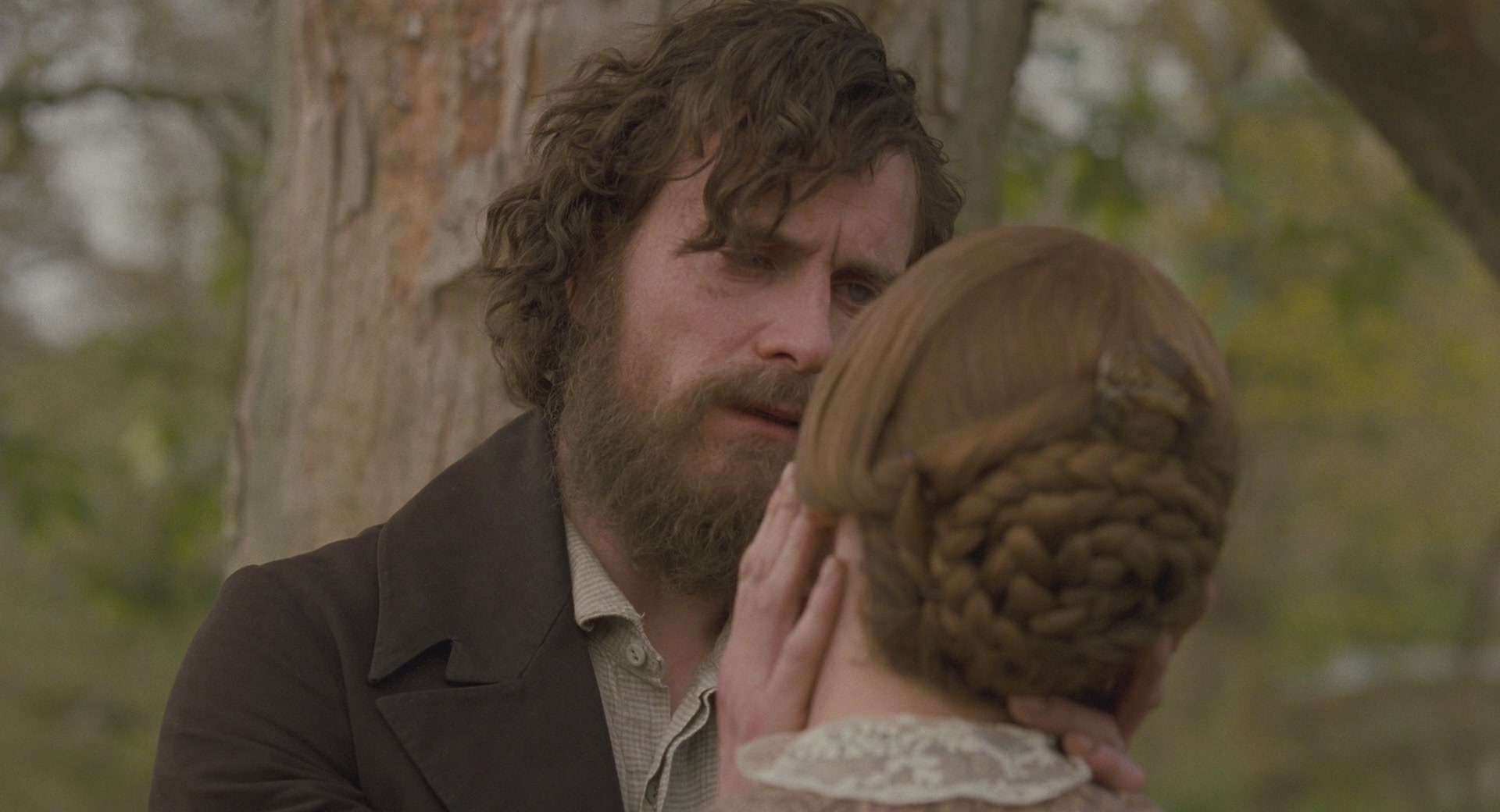
9. Jane Eyre
This film was probably one that divided a lot of opinion. I believe there are many, who are still enamoured with Toby Stevens interpretation of Mr. Rochester, but I think Fassbender's performance is tailored more to a male audience. Fassbender, I felt, encapsulated Rochester's cold exterior, whilst giving us brief glimpses of his other side well. A lot of people's problem with this version, might be that there is little emotional attachment for the audience to grasp, but in my opinion this acts as a positive for the film. I think that this form of stoicism was used in a way to try and best capture, how the romance would have probably evolved during this period setting. The probelm for me with the film was more the screenplay, despite the length of the film, I felt that some of the slowness (and even the stoicism) didn't provide enough variance and episodes from the book. This seemed to be reflelcted in Mia Wasikowska performance who, whilst good, seemed to be too restrained, making Jane not seem to have much character development. I also didn't feel there was enough elaboration on the character Adele and her relationships with Rochester, Jane and even Mrs. Fairfax (Judi Dench). Still I thought it was a good adaptation, with a good score and had a nice understated ending to it, in fitting with the film as a whole.
8. 50/50 A film starring Seth Rogen, wouldn't be my first choice when going to the pictures, but I was willing to give him another go in this comedy drama about dealing with his friend's (Joseph Gordon-Levitt) diagnosis of cancer. The film starts of very light-heartedly as we experience the everyday life of Levitt's character, who is a risk averse young man, who keeps fit, has a good job and beautiful girlfriend (Bryce Dallas Howard). His world suddenly comes crashing down when he is diagnosed with a rare debilitating cancer and is given a 50/50 chance of surviving. It really serves as a good film for the younger generation in showing the impact such an illness can have on one's life, as it mixes the serious moments with light hearted moments of comic relief. Levitt gives a very believable performance, as a young man who wants to keep his independance, and doesn't want to become another burden on his mum (Angelica Huston), who already has a job of looking after his senile father. It is genuinely touching as he keeps her at a distance, while trying to keep his independance. Ironically his independance is challenged before being diagnosed with his inability to drive (he always thought driving was dangerous). It is through this menial task that he learns who remain loyal to him, as his girlfriend soon becomes unreliable and is eventually found by his friend to be cheating on him.
Whilst Rogen's character does use Levitt's illness to his advantage with women, we eventually learn that Rogen is doing this to help keep his friend's spirits up. During his treatments he also befriends two other terminally ill patients, and you can feel his pain as they at least have lived longer fuller lives. He also begins growing closer to his therapist (Anna Kendrick) on a personal level, and though predictable, it serves as a nice sub-plot to the film. He eventaully resolves to let his parents in, and it becomes quite heavy, but in a moving way as he faces his fate.
I wouldn't be surprised to see this get some acting nominations as all give heart-warming portrayels of their respective characters. However, I think it is Rogen who comes out best in this, as he plays to his strengths in his role. I'm sure this will be many's film of 2011. 7. Rise of the Planet of the Apes
Being a fan of the original Apes' films, espescially the ones with Ricardo Montalban, of which this film is loosely based on. I went into this with slight trepidation but a lot of anticipation. It didn't disappoint. It managed to keep what the best aspect of the originals in, whilst at the same time providing a completely different slant on it. James Franco plays a drug developer who is part of a team looking for an alzheimer's cure, of which his father (John Lithgow) is a sufferer. The experimental drug he is working on is tested on Apes, and after one causes havoc as a result of the treatment, they are all put down, save for a new-born chimp, which Franco duly adopts. The chimp (named Caeser) is raised like a child, Franco soon discovers that the primate is developer above average brain activity and operates like a high-level human. He soon enlists the help of a primatologist (Freida Pinto). As his father's condition worsens Franco uses the drug to help his father, which works for a couple of years, before his father's condition rapidly deteriorates. It is through his father's relapse, that Caeser (Andy Serkis) becomes protective and attacks members of the public, where he is captured and imprisoned in an Ape sanctuary. It is through his mistreatment here that he uses his intelligence to prove his superiority to fellow inmates and soon manages to inject them with the drug. With their new found intelligence the Apes soon revolt and cause havoc on San Francisco, where the Apes and Man are on a collision course that could change the planet's future forever.
The film really does welll to reboot a franchise, which had already been attempted wtih Burton's failed remake of Planet of the Apes. It manages to capture the sentiments of Escape and Conquest of the Planet of the Apes, but against a much more realistic backdrop. It is also a far more powerful film than it's predecessors, the moment when Caesar first speaks a good example. Easily one of the better action movies of the year.
6. Senna If ever there was a documentary that could exude broad appeal to non-fans of it's subject matter it's this. Ayrton Senna is probably still the name most synonymous with Formula 1 worldwide. This documentary's use of all archival footage, only serves to further enhance the reputation of one of the world's most charasmatic sportsman. Though the footage is adrenaline-fuelled and highly entertaining, it's somewhat let down by it's black and white portrayel of Senna and his biggest rival Alain Prost. Even the most ardent Senna fan would have to admit that the film is at time unfair and unbalanced in it's treatment of Prost. Despite this it is still highly emotive as it leads the audience, through a series of quite remarkable feats from Senna's F1 career, to the ultimate conclusion of that fatal weekend at Imola. It's an absolute must for anyone who holds a passion for sports and it's competitors. 5. X-Men: First Class After the awful X-men 3, it was time for a revamp, and this prequel that provides us with the backgrounds of Professor Xavier (James McAvoy) and Magneto (Michael Fassbender) was the perfect way to go. The film gives these familiar characters (including Mystique) much more depth and understanding than the previous installments do. As all strive to take on Kevin Bacon's evil mutant Sebastian Shaw, who Magneto has learnt was respnsible for his parents death in Nazi Germany, and is now behind the Cuban Missile Crisis. Professor Charles Xavier sets up an academy for fellow mutants to join in order to build a team to take down Shaw, some familiar in the X-men cannon and some new.
The film is written by Bryan Singer and directed by Michael Vaughn and this helps create the perfect blend on comic book action adventure. Nothing in this film seems superfluous, and it all formulates perfectly as we see the eventual split of the X-men to their respective sides. It's a very strong cast too, with Fassbender, who gives the stand out performance, that even makes Sir Ian McKellen look amateurish. The only problem for me was that I thought Nicholas Hoult was miscast as Beast. Other than that it really is up there with the best comic book adaptation and gives X2 more than a run for it's money. 4. Crazy, Stupid, Love.
This was probably the biggest suprise for me at the cinema for years. Admittedly I wasn't expecting much, as only a handful of original and entertaining rom-coms have come from Hollywood in the past 20 years. It was helped by the fact that it didn't fall for the falacy that being crude meant being funny, it remained intelligent throughout. I hadn't seen much of Ryan Gosling's work previously, but thought he was a great choice in the role of playboy-cum-mentor to Steve Carell's restrained, newly single Cal. The whole ensemble cast did a great job, and though it wasn't the laugh out loud comedy, many probably would have expected (wanted), it remained light, but funny throughout. I was also impressed by the directors', (who only previous work had been on Pixar projects), consumate ease in producing a solid rom-com. They were also not afraid to use slapstick in a modern comedy, that I thought was refreshing, and I felt it worked. There were also additional subplots involving Gosling and the always entertaining Emma Stone, and Carell's ex's relationship with Kevin Bacon's character. This gave the film additional scope in developing different complexities of romance and relationships. The only real let down was the slight lack of integrity at a couple of points in the movie, but overall it was a very enjoyable piece that I look forward to revisiting.
3. Tinker Tailor Soldier Spy
John Le Carre's novel was updated once again, this time Gary Oldman as Le Carre's protaganist George Smiley. Let The Right One In's Thomas Alfredson was given the opportunity to direct, and used a similar style and method to his previous work. He turned out to be the right choice as his low octane approach, as well as his good eye for nostalgia provided the perfect settings for this thriller. What I really enjoyed about this film is that it wasn't gimmicky, it didn't try to be politically correct and didn't try to appeal to the new wave of spy fans. It's complex plot still demanded the audiences attention and concentration. The performances too were captivating, like The Godfather it was hard to find any blemishes in the acting. Everyone gave a depth to their characters even with limited screen time, it was easy to see what was being presented to the audience. In this repressed environment, ultimately there was still a lot of underlying emotion and humanity in this organisation that gave them motive to their varying acts of betrayel. Oldman's restrained Smiley will no doubt earn him his first Oscar nomination (shocking I know). Whilst Cumberbatch, Hardy, Strong will all no doubt be recognised in some form. It will be interesting to see if there will be any revisiting of the Smiley character in film or even by Le Carre himself.
2. Midnight in Paris I wouldn't call myself a Woody Allen fan, as I haven't seen nearly enough of his work, but what I have seen has always kept interested and entertained. Midnight in Paris is an absolute treat from the veteran director, as he seemingly puts a lot of personal interest and affection into this film about an engaged writer's (Owen Wilson) personal fascination with what he considers the golden age of Paris' creativity. Every night he travels back into the 1920's, the period for which he holds so much admiration, and meets some of his most inspirational heroes. He soon arrives at a party hosted by the Fitzgeralds, with music by Cole Porter and fellow guests such as a young Ernest Hemingway. It is wholly fantastical, endearing and charming, as Wilson's character grows closer to vintage Paris and further away from his modern day life and fiancee.
Another ensemble piece it contains everyone from Cathy Bates to France's first lady Carla Bruni, all of whom perform well. Marion Cotillard seems to get increasingly beautiful with each new film role, and it's easy to see why Wilson is attracted to her. Even Adrien Brody gives a great turn as Salvador Dali. Wilson himself was ideally cast as the wide eyed writer looking for some kind of resolve from his experiences, and was reminiscent of the younger Allen. Some of the philistine's out there may fail to fall in love with cast of characters, but even though I'm not a particular fan of any who featured, I could see why people are so passionate about them. It was a very enchanting cinematic experience and though short on runtime, it was very fulfilling. 1. We Need To Talk About Kevin This was my first experience of a Lynne Ramsey film, and boy what an experience. I was aware before seeing this, that she had taken a long time out of film making before taking on this project. I'm guessing that with the books release in 2003, she must've really fallen in love with the idea of adapting it in to a film and used the time to perfect her adaptation. It really turns out to be one of the cleverest psychological thrillers in years. Ramsey uses a disjointed narrative to tell this story of a mother's (Tilda Swinton) anguish over the violent act carried out by her son (Ezra Miller). Whilst we only see this act in pieces, we re-live her son's upbringing through the eyes of Swinton, as she tries to establish where she went wrong, as well as seeing how she comes to terms with the aftermath of the act. This clever device allows the audience to take their own interpretation as to why it was presented this way. I for one think that Swinton tries to make herself look blameless and a allows herself to become a victim, whilst others may argue the questionable lack of discipline by the father (John C. Reilly) or that the child was always going to end up how he did. Of course this provokes further questions which are far more complex than can be transcribed here. The pacing also adds to the tension when Swinton is in one on one situations with her son, and the psychological elements are played out.
I've never really been a fan of Swinton's, but there's no denying the fact she's got talent, and she excels in this role. At times you really empathise with her, espescially as she deals with the victims of her sons act as well as being made a social outcast in her town. Of course where Ramsey is clever is giving small implications that Swinton's character isn't entirely blameless as the film develops. As for Ezra Miller and indeed Jasper Newell's performances as Kevin are trully chilling, enough to put even the most etheral being of parenting. Though the character is for the majority of the movie painted as pretty one-dimensional, save for a few glimpses of his softer side. I think, as earlier suggested, this is probably a part of the retrospective plot device used by Ramsey to make the viewer question what they're viewing.
In many ways it reminded we of Gus Van Sants's Elephant, but this manages to somehow go much further in dealing with the psychological aspect of violent teenagers and their background. With the amount of ambiguity, the film serves as a great tool in provoking thought on the questions of nurture and how much parents are accountable in acts of atrocities. There is no answer given in the film, instead it remains entirely open to differing suggestions and opinions. It isn't a film to be taken on face value, and if you don't do that, you will be richly rewarded by a riveting and absorbing experience.
My most anticipated films of 2012 are: Ridley Scott's Alien prequel Prometheus, Michael Fassbender in Shame, Spielberg's production of War Horse, the Sam Mendes installment of Bond's Skyfall and of course the conclusion to Christopher Nolan's Batman trilogy The Dark Knight Rises.